The Indian Government has finally decided to hold an annual jamboree around water. Beginning this year, the India Water Week proposes to be India's showcase event to the global water community -- exhibiting India's latest technology; project capabilities on the consultancy front; construction and manufacturing prowess et al.
Also on the agenda during the Week would be a platform for exchange of ideas on policy and technology in the water sector, which is now being recognised to be critical to India's continuing economic and social growth.
The theme for the first Week is apt - “Water, Energy and Food Security call for Solution”. Policy intervention as well as increased investment is the need of the hour in all the three component sectors of the theme.
It is time that India held such a show. The highly successful Singapore International Water Week and the Stockholm Water Week are two such events that the host Governments have been promoting for several years now. And, both events have constantly brought global experts, professionals, policymakers, ministers and top government officials and honchos from the private sector together at a single platform.
Hopefully, India Water Week will become one such mega event that the global water community will find difficult to miss. Much would, however, depend on how the event unfolds and what the "take-aways" are.
India Water Week (IWW - 2012) will be held at Vigyan Bhawan, New Delhi during April 10–14.
Saturday, April 7, 2012

Sunday, December 11, 2011
Delhi opens doors for private players in water sector
The Delhi Government has initiated much-awaited reforms in water sector by opening doors for private entities in management, maintenance and distribution of water in several areas of the city.
A board meeting of the Delhi Jal Board (DJB) on November 28, which was chaired by Chief Minister Sheila Dikshit, approved a long-pending proposal to involve private sector in three pilot projects in the command areas of Malviya Nagar, Vasant Vihar and Nangloi underground reservoirs and water treatment plants.
The move, which has been expected to several months, comes in the wake of the successful privatisation of power distribution in the city-state.
The Delhi Government has finally bit the bullet, even though there has been much opposition to its move to privatise power distribution. And, over the past few since private distcoms started distributing power, it cannot be conclusively said, as yet, that the move has been for the better.
But, in the case of water, some operations, including supply of water in underfed areas through roping in private tanker suppliers, have had mixed results.
Delhi would now join a growing list of cities across India, in which water distribution, billing and management of non-revenue water (NRW) is being handed over to the private sector while local water utilities or municipal bodies retain the power to increase water charges with them.
Also, since infrastructure assets would remain with the Government, it would be worthwhile to watch how privatisation helps in getting water to the thirsty in the national Capital.
A board meeting of the Delhi Jal Board (DJB) on November 28, which was chaired by Chief Minister Sheila Dikshit, approved a long-pending proposal to involve private sector in three pilot projects in the command areas of Malviya Nagar, Vasant Vihar and Nangloi underground reservoirs and water treatment plants.
The move, which has been expected to several months, comes in the wake of the successful privatisation of power distribution in the city-state.
The Delhi Government has finally bit the bullet, even though there has been much opposition to its move to privatise power distribution. And, over the past few since private distcoms started distributing power, it cannot be conclusively said, as yet, that the move has been for the better.
But, in the case of water, some operations, including supply of water in underfed areas through roping in private tanker suppliers, have had mixed results.
Delhi would now join a growing list of cities across India, in which water distribution, billing and management of non-revenue water (NRW) is being handed over to the private sector while local water utilities or municipal bodies retain the power to increase water charges with them.
Also, since infrastructure assets would remain with the Government, it would be worthwhile to watch how privatisation helps in getting water to the thirsty in the national Capital.
Wednesday, November 2, 2011
Now, slums in Mumbai to have water meters.
Municipal authorities have initiated efforts to install water meters across slums in Mumbai. The move is expected to provide exact water usage details of slumdwellers and bill them accordingly.
The Brihanmumbai Municipal Corporation (BMC) has made plans to install about 1.5 lakh non-automatic water meters (AMR) in the slums, having scrapped an earlier plan to put in place automatic water meters.
In some slum areas, the BMC had previously installed regular mechanical meters, but over the years, most of these meters have been tampered with or taken off altogether.
BMC is expected to begin the tender process for installing meters in slums in the next few weeks. The agency will shortly give intimation of providing non-automatic water meters and invite initial response from Indian and foreign companies to bid for the tender.
BMC expects to wrap up the entire process and have the water meters in place within six months. So far, as high as 80 per cent of water connections in slum areas around the city are unauthorised and not charged for. With the move, BMC hopes to know the usage of water in residential as well as commercial areas and slums.
Apparently, the prohibitive cost of the automatic water meters has forced the BMC to initially install non-automated water meters in the slums. And, then based on the response, it may add an electronic sensor to the meters.
With the water meters in place in the slums, Mumbai will be among a handful of cities across the world to have meters in slum areas to tap water usage.
The Brihanmumbai Municipal Corporation (BMC) has made plans to install about 1.5 lakh non-automatic water meters (AMR) in the slums, having scrapped an earlier plan to put in place automatic water meters.
In some slum areas, the BMC had previously installed regular mechanical meters, but over the years, most of these meters have been tampered with or taken off altogether.
BMC is expected to begin the tender process for installing meters in slums in the next few weeks. The agency will shortly give intimation of providing non-automatic water meters and invite initial response from Indian and foreign companies to bid for the tender.
BMC expects to wrap up the entire process and have the water meters in place within six months. So far, as high as 80 per cent of water connections in slum areas around the city are unauthorised and not charged for. With the move, BMC hopes to know the usage of water in residential as well as commercial areas and slums.
Apparently, the prohibitive cost of the automatic water meters has forced the BMC to initially install non-automated water meters in the slums. And, then based on the response, it may add an electronic sensor to the meters.
With the water meters in place in the slums, Mumbai will be among a handful of cities across the world to have meters in slum areas to tap water usage.
Tuesday, September 6, 2011
Contamination, groundwater decline keep DJB on its toes this summer
It seems the Delhi Jal Board (DJB) has a lot to do this summer besides struggling to supply water to the residents of the capital city. On its agenda are issues of groundwater decline and supply of contaminated water to certain areas across the city.
Very soon, the state-run water utility is expected to reply to a notice it was issued by the National Human Rights Commission (NHRC) last month on supply of contaminated water in the national Capital.
NHRC has asked the DJB chief to submit a detailed report within four weeks, explaining the measures being taken to ensure potable water supply to the city's people.
The notice by NHRC came in the wake of a survey jointly conducted by DJB and the Municipal Corporation of Delhi (MCD) that revealed that 67 major water pipelines out of the 200 areas examined had cracks in them and were being contaminated by sewage.
Also, the pipelines were quite old and some in old Delhi including Chandni Chowk are almost 100 years old and have rusted, leading to major leakages.
The joint survey also stated that many residential colonies in Delhi had been getting contaminated water and the dangers posed by it are manifold as it may cause a variety of ailments including viral infection, hepatitis E, typhoid, cholera, jaundice, among others.
The issue of water contamination is certainly not new in the city. In fact, almost every year, reports emerge of colonies across the cities getting contaminated water. DJB often raises its hands, expressing its helplessness in the wake of mounting costs to run its huge operations. The reported 40 per cent non-revenue water (NRW) that the utility has does not help its case.
One has only to take a closer look at the city's water infrastructure to see a picture of neglect and apathy. Pipelines, even in the poshest of colonies, are rusting and leaking. Wastewater and solid waste can be found along the water pipelines that carry water that DJB calls potable.
No wonder, Delhi, like several other cities in India, is a major market for home-based water treatment systems makers.
A NHRC spokesperson had said in August, "The Commission is deeply concerned with the hazards posed to the citizens of Delhi due to supply of contaminated water. The Commission observed that the contents of the report, if true, amounts to serious violation of right to health of the people of Delhi".
MCD has said that water contamination is not just restricted to a few pockets of the city and has been found along with damaged pipelines in all 12 municipal zones in the city. Also, as many as 642 water pipelines of DJB are passing through drains and becoming a public hazard.
Delhi Jal Board CEO Ramesh Negi has admitted there is an issue of water contamination in certain areas in the city.
One possible solution, says Negi, lies in making "dedicated utility corridors" on the lines of other international cities where there are separate corridor s for electricity lines, water lines, and sewer lines.
DJB tackles a huge network of over 14,000 km of pipelines and 700 km of water mains and rest peripheral lines. As the city grows and demand for water grows, the DJB would have to push for solutions that are long-lasting. It would need to make serious efforts to bring down NRW and boost its revenues.
It has also to make efforts to arrest the decline in groundwater in the city. It was asked by the Delhi government to probe the drastic decline in groundwater levels across the city.
DJB has also been directed against permitting the digging of new borewells in the city till February 2012.
The move follows a missive from the Central Ground Water Authority (CGWA) that warned that several areas in Delhi, particularly south and southwest districts, had seen a decline in groundwater levels due to as many as 350 permissions being given in 2010-11 for extraction of groundwater by way of constructing borewells and tube wells across Delhi.
The first step to tackle this problem would be to stop succumbing to political pressure. The water utility has been under constant pressure from MLAs to clear borewell projects for their respective constituencies. It's time this practice is stopped.
Also, DJB would need to coordinate better with the Delhi government's revenue department and the Delhi Police. Regulation and monitoring of groundwater resources is supposed to have been a joint effort between the three departments.
Very soon, the state-run water utility is expected to reply to a notice it was issued by the National Human Rights Commission (NHRC) last month on supply of contaminated water in the national Capital.
NHRC has asked the DJB chief to submit a detailed report within four weeks, explaining the measures being taken to ensure potable water supply to the city's people.
The notice by NHRC came in the wake of a survey jointly conducted by DJB and the Municipal Corporation of Delhi (MCD) that revealed that 67 major water pipelines out of the 200 areas examined had cracks in them and were being contaminated by sewage.
Also, the pipelines were quite old and some in old Delhi including Chandni Chowk are almost 100 years old and have rusted, leading to major leakages.
The joint survey also stated that many residential colonies in Delhi had been getting contaminated water and the dangers posed by it are manifold as it may cause a variety of ailments including viral infection, hepatitis E, typhoid, cholera, jaundice, among others.
The issue of water contamination is certainly not new in the city. In fact, almost every year, reports emerge of colonies across the cities getting contaminated water. DJB often raises its hands, expressing its helplessness in the wake of mounting costs to run its huge operations. The reported 40 per cent non-revenue water (NRW) that the utility has does not help its case.
One has only to take a closer look at the city's water infrastructure to see a picture of neglect and apathy. Pipelines, even in the poshest of colonies, are rusting and leaking. Wastewater and solid waste can be found along the water pipelines that carry water that DJB calls potable.
No wonder, Delhi, like several other cities in India, is a major market for home-based water treatment systems makers.
A NHRC spokesperson had said in August, "The Commission is deeply concerned with the hazards posed to the citizens of Delhi due to supply of contaminated water. The Commission observed that the contents of the report, if true, amounts to serious violation of right to health of the people of Delhi".
MCD has said that water contamination is not just restricted to a few pockets of the city and has been found along with damaged pipelines in all 12 municipal zones in the city. Also, as many as 642 water pipelines of DJB are passing through drains and becoming a public hazard.
Delhi Jal Board CEO Ramesh Negi has admitted there is an issue of water contamination in certain areas in the city.
One possible solution, says Negi, lies in making "dedicated utility corridors" on the lines of other international cities where there are separate corridor s for electricity lines, water lines, and sewer lines.
DJB tackles a huge network of over 14,000 km of pipelines and 700 km of water mains and rest peripheral lines. As the city grows and demand for water grows, the DJB would have to push for solutions that are long-lasting. It would need to make serious efforts to bring down NRW and boost its revenues.
It has also to make efforts to arrest the decline in groundwater in the city. It was asked by the Delhi government to probe the drastic decline in groundwater levels across the city.
DJB has also been directed against permitting the digging of new borewells in the city till February 2012.
The move follows a missive from the Central Ground Water Authority (CGWA) that warned that several areas in Delhi, particularly south and southwest districts, had seen a decline in groundwater levels due to as many as 350 permissions being given in 2010-11 for extraction of groundwater by way of constructing borewells and tube wells across Delhi.
The first step to tackle this problem would be to stop succumbing to political pressure. The water utility has been under constant pressure from MLAs to clear borewell projects for their respective constituencies. It's time this practice is stopped.
Also, DJB would need to coordinate better with the Delhi government's revenue department and the Delhi Police. Regulation and monitoring of groundwater resources is supposed to have been a joint effort between the three departments.
Tuesday, July 5, 2011
For water, we may have to resort to 'urine recovery'
Man's quest for additional water supplies in the wake of a growing global scarcity could very well stop within. At least that's what one of the experts expects in the time to come.
Dr James Barnard, recipient of this year's Lee Kuan Yew Water prize, feels at some stage in the near future, urine recovery could turn out to be an additional source of water.
To some the idea may seem repulsive, but Barnard, who is hailed as the 'Father of Biological Nutrient Removal' and recognised for using micro-organisms to treat used water for the protection of lakes and rivers, is serious about the potential of the idea.
And, he ought to know what works best.
Barnard was given the Lee Kuan Yew Water prize for his groundbreaking invention of the Biological Nutrient Removal (BNR) technology, an environmentally sustainable, biological method to treat used water.
The technology has revolutionised used water treatment processes by using naturally occurring micro-organisms instead of conventional chemicals to remove nitrogen and phosphorus from water. It helps to protect water quality in lakes and rivers, while minimising negative impact on the environment. It also promotes the recycling of water.
According to a news report in Singapore, where Barnard received the prize during the Singapore International Water Week (SIWW), some parts of the world are already quite advanced in what he calls "urine recovery".
Barnard was quoted as saying, "It's already happening, a lot of people just don't know it and accept it therefore".
The scientist thinks it would be better to facilitate the process of urine collection before it gets diluted in wastewater. For this he suggets dual flushing toilets where urine flows through separate pipes, directly to wastewater treatment plants.
Barnard gives the example of a suburb in Stockholm, Sweden, where such a facility already exists.
"I'm thinking in new developments like perhaps golf courses. Most of these developments have housing around them. Why should we not separate the urine in that and re-use it on the fairways? I think that's where we can make a start in the developed world. We cannot go into the buildings and change those toilets."
Urine, when treated could be a resource for drinking and agricultural use. Its by-products could also be used as a source of energy and fertilisers, Barnard was quoted as saying in the news report.
By the way, people in a Latam country were encouraged to urinate while taking a bath. The idea was to save water in flushing.
Dr James Barnard, recipient of this year's Lee Kuan Yew Water prize, feels at some stage in the near future, urine recovery could turn out to be an additional source of water.
To some the idea may seem repulsive, but Barnard, who is hailed as the 'Father of Biological Nutrient Removal' and recognised for using micro-organisms to treat used water for the protection of lakes and rivers, is serious about the potential of the idea.
And, he ought to know what works best.
Barnard was given the Lee Kuan Yew Water prize for his groundbreaking invention of the Biological Nutrient Removal (BNR) technology, an environmentally sustainable, biological method to treat used water.
The technology has revolutionised used water treatment processes by using naturally occurring micro-organisms instead of conventional chemicals to remove nitrogen and phosphorus from water. It helps to protect water quality in lakes and rivers, while minimising negative impact on the environment. It also promotes the recycling of water.
According to a news report in Singapore, where Barnard received the prize during the Singapore International Water Week (SIWW), some parts of the world are already quite advanced in what he calls "urine recovery".
Barnard was quoted as saying, "It's already happening, a lot of people just don't know it and accept it therefore".
The scientist thinks it would be better to facilitate the process of urine collection before it gets diluted in wastewater. For this he suggets dual flushing toilets where urine flows through separate pipes, directly to wastewater treatment plants.
Barnard gives the example of a suburb in Stockholm, Sweden, where such a facility already exists.
"I'm thinking in new developments like perhaps golf courses. Most of these developments have housing around them. Why should we not separate the urine in that and re-use it on the fairways? I think that's where we can make a start in the developed world. We cannot go into the buildings and change those toilets."
Urine, when treated could be a resource for drinking and agricultural use. Its by-products could also be used as a source of energy and fertilisers, Barnard was quoted as saying in the news report.
By the way, people in a Latam country were encouraged to urinate while taking a bath. The idea was to save water in flushing.
Friday, May 20, 2011
New application to help find nearest water fountain
Feeling thirsty and don't want to buy a bottle of bottled water, or don't have enough to buy one. Need not despair.
Just turn on your new age phone and get to know where the nearest public water fountain is located. Of course, you would need to be in the United States. Or, to be more precise in Berkeley in the state of California. For now, at least.
One of the leading US-based think tanks, the Pacific Institute, is collaborating with Google to launch WeTap, what it says is a free smartphone application that could help address a major water challenge: finding, supporting, and expanding the nation’s public drinking water fountains.
With WeTap, smartphone users will be able to find a working water fountain when they want one – and they can quickly and easily add public drinking water fountains they encounter to a national database of fountains right from their smartphones, with information on the fountain’s location, condition, and quality, and even add comments and upload a photo. Berkeley will be the first city to crowd-source map its water fountains, the ppacific Institute said recently.
The test version of WeTap is ready and volunteers were being sought to show the world where Berkeley’s drinking fountains are. The Pacific Institute was at the time of releasing a statement, recruiting volunteers who own Android-capable phones and have gmail and Picasa photo accounts to test the application by finding water fountains and uploading them on their phones, and to provide feedback on the application.
WeTap makes the public water fountain a find – and helps you find one. Valuing tap water – both the quality and access – is an important step to ensure our water remains safe, tasty, and protected. For more information, visit www.wetap.org.
Now, for the application-driven people in the US -- during the visits there, I have often been amazed at the dependence on technology to reach from point A to point B while in India, more than a few people are always around on highways, state roads or even on dirt tracks, to guide you to the destination -- this would come in handy. No doubt about it.
Also, because, unlike in India, where even the potable water supplied by municipal water utilities has to be treated at home, in the US, one can safely drink water from any public water fountain. Well, almost anywhere.
Once the application has been tested in continental US (knowing Google, the day would not be far), would this application find favour overseas? As far as developed countries with clean potable water that can be drunk right from the tap are concerned, it should logically be the case.
But, what about places like India? Or, rest of the developing world or the underdeveloped countries, where potable water suplied by public water utilities through age old pipelines does not have the same quality as in the US and West?
Would we get to see the application tweaked to find the nearest shop that stocks mineral water, or by the time we get to have this application ready for a global launch, we in India at least, would have managed to supply safe water in our refurbished water pipeline networks?
Here's the mapping on Google.
Just turn on your new age phone and get to know where the nearest public water fountain is located. Of course, you would need to be in the United States. Or, to be more precise in Berkeley in the state of California. For now, at least.
One of the leading US-based think tanks, the Pacific Institute, is collaborating with Google to launch WeTap, what it says is a free smartphone application that could help address a major water challenge: finding, supporting, and expanding the nation’s public drinking water fountains.
With WeTap, smartphone users will be able to find a working water fountain when they want one – and they can quickly and easily add public drinking water fountains they encounter to a national database of fountains right from their smartphones, with information on the fountain’s location, condition, and quality, and even add comments and upload a photo. Berkeley will be the first city to crowd-source map its water fountains, the ppacific Institute said recently.
The test version of WeTap is ready and volunteers were being sought to show the world where Berkeley’s drinking fountains are. The Pacific Institute was at the time of releasing a statement, recruiting volunteers who own Android-capable phones and have gmail and Picasa photo accounts to test the application by finding water fountains and uploading them on their phones, and to provide feedback on the application.
WeTap makes the public water fountain a find – and helps you find one. Valuing tap water – both the quality and access – is an important step to ensure our water remains safe, tasty, and protected. For more information, visit www.wetap.org.
Now, for the application-driven people in the US -- during the visits there, I have often been amazed at the dependence on technology to reach from point A to point B while in India, more than a few people are always around on highways, state roads or even on dirt tracks, to guide you to the destination -- this would come in handy. No doubt about it.
Also, because, unlike in India, where even the potable water supplied by municipal water utilities has to be treated at home, in the US, one can safely drink water from any public water fountain. Well, almost anywhere.
Once the application has been tested in continental US (knowing Google, the day would not be far), would this application find favour overseas? As far as developed countries with clean potable water that can be drunk right from the tap are concerned, it should logically be the case.
But, what about places like India? Or, rest of the developing world or the underdeveloped countries, where potable water suplied by public water utilities through age old pipelines does not have the same quality as in the US and West?
Would we get to see the application tweaked to find the nearest shop that stocks mineral water, or by the time we get to have this application ready for a global launch, we in India at least, would have managed to supply safe water in our refurbished water pipeline networks?
Here's the mapping on Google.
Thursday, April 21, 2011
Plan panel suggests cap, tax on groundwater usage
India's groundwater resources are vanishing. And, at a rate that is being considered far too dangerous for a country which has perhaps the highest rates of extraction of groundwater.
Agriculture remains the major recipient of groundwater.
The Indian government is now thinking of bringing in a cap and a tax on groundwater usage so that its indiscriminate use for irrigation is discouraged. The move is expected to help preserve the fast depleting groundwater levels across the country.
The Planning Commission is working on a new groundwater bill and water framework law for the Twelfth Five-Year Plan period that begins next year. The bill is expected to include several other sweeping changes to arrest the decline in groundwater levels.
Planning Commission Member Mihir Shah recently made a presentation to Prime Minister Manmohan Singh in which he suggested that without legal reform, "mining of groundwater will be impossible to control".
Over-extraction of groundwater has lowered the water table to dangerous levels across several states, the mid-term appraisal report of the Eleventh Five-year Plan has warned.
Last year, a World Bank report too had also warned that overexploitation of groundwater in India was rampant and 60 per cent of all aquifers in the country could run dry in 20 years or will be in a critical condition.
A Central law that regulates groundwater usage is much needed. But, it will not be an easy task. There are several laws governing water in India. And, water remains a state subject too.
Political compulsions could undermine a move to bring harmony on this front. But, a beginning has to be made.
ON its part, Planning Commission has suggested that a National Water Commission, a central regulator monitoring investment clearances for water projects, should be set up to affectively gauge and incentivize state compliance.
Some states are already charging for irrigation from canals and dams and use the money for maintenance work. But, groundwater usage remains largely out of tax ambit in several states.
Agriculture remains the major recipient of groundwater.
The Indian government is now thinking of bringing in a cap and a tax on groundwater usage so that its indiscriminate use for irrigation is discouraged. The move is expected to help preserve the fast depleting groundwater levels across the country.
The Planning Commission is working on a new groundwater bill and water framework law for the Twelfth Five-Year Plan period that begins next year. The bill is expected to include several other sweeping changes to arrest the decline in groundwater levels.
Planning Commission Member Mihir Shah recently made a presentation to Prime Minister Manmohan Singh in which he suggested that without legal reform, "mining of groundwater will be impossible to control".
Over-extraction of groundwater has lowered the water table to dangerous levels across several states, the mid-term appraisal report of the Eleventh Five-year Plan has warned.
Last year, a World Bank report too had also warned that overexploitation of groundwater in India was rampant and 60 per cent of all aquifers in the country could run dry in 20 years or will be in a critical condition.
A Central law that regulates groundwater usage is much needed. But, it will not be an easy task. There are several laws governing water in India. And, water remains a state subject too.
Political compulsions could undermine a move to bring harmony on this front. But, a beginning has to be made.
ON its part, Planning Commission has suggested that a National Water Commission, a central regulator monitoring investment clearances for water projects, should be set up to affectively gauge and incentivize state compliance.
Some states are already charging for irrigation from canals and dams and use the money for maintenance work. But, groundwater usage remains largely out of tax ambit in several states.
Tuesday, April 12, 2011
Jharkhand ropes in private sector to manage drinking water supply
After Delhi indicated last month that it would rope in the private sector to help get over it water woes, it is the turn of India's eastern state of Jharkhand to bring in the private sector to manage supply of drinking water.
The state announced earlier this month that it has entered into an agreement with a Mumbai-based company under the public private partnership mode for the same.
The private company that has been engaged by the state is expected to ensure water supply and levying of proper charges for the water consumed.
The entire state is reeling under a severe water crisis as most of the major rivers - Koel, Shankh, Swarnarekha, Paras and Dewaki - are running dry. Also, the state has not received adequate rainfall for past two years and has been declared drought-hit six out of the past 10 years.
The time is right to involve the private sector, but already some doubts have been raised by none other than the state's top bureaucrat. Jharkhand's new Chief Secretary S K Choudhary is unsure of the viability of the PPP scheme.
He has reportedly said that the state drinking water and sanitation department (DWSD) should go for a pilot project first before implementing the scheme in the state capital. The scheme was either likely to make water unavailable or make it costlier to poor people, it is being felt.
The civil servant feels that mere rules and regulations would not solve the water crisis unless there was a general awareness about water conservation.
No doubt, the thinking is in the right direction. But, does that mean that the private sector cannot bring in its expertise to resolve long-standing water problems in the state. For too long, the state's people have suffered.
Jharkhand could look around and see how some of the states that have brought in the private sector have progressed.
The state announced earlier this month that it has entered into an agreement with a Mumbai-based company under the public private partnership mode for the same.
The private company that has been engaged by the state is expected to ensure water supply and levying of proper charges for the water consumed.
The entire state is reeling under a severe water crisis as most of the major rivers - Koel, Shankh, Swarnarekha, Paras and Dewaki - are running dry. Also, the state has not received adequate rainfall for past two years and has been declared drought-hit six out of the past 10 years.
The time is right to involve the private sector, but already some doubts have been raised by none other than the state's top bureaucrat. Jharkhand's new Chief Secretary S K Choudhary is unsure of the viability of the PPP scheme.
He has reportedly said that the state drinking water and sanitation department (DWSD) should go for a pilot project first before implementing the scheme in the state capital. The scheme was either likely to make water unavailable or make it costlier to poor people, it is being felt.
The civil servant feels that mere rules and regulations would not solve the water crisis unless there was a general awareness about water conservation.
No doubt, the thinking is in the right direction. But, does that mean that the private sector cannot bring in its expertise to resolve long-standing water problems in the state. For too long, the state's people have suffered.
Jharkhand could look around and see how some of the states that have brought in the private sector have progressed.
Friday, March 25, 2011
Delhi may rope in private sector for water distribution, treatment
After years of struggle to solve its water woes on its own, Delhi seems to be gearing up to embrace the private sector.
The Delhi government has indicated that it is considering joint ventures with various private companies for treatment and distribution of water. The government had a few years ago handed over distribution of power in private hands, an exercise that has met with reasonable success.
Recently, Delhi Chief Minister Sheila Dikshit also hinted at overhauling the water distribution system on the lines of electricity distribution that the city government carried out in 2002.
The city's water utility Delhi Jal Board is looking at allocating treatment and distribution to at least four or five separate units that will take care of command areas under Wazirabad, Chandrawal, Sonia Vihar, Nangloi, Haiderpur and Bhagirathi treatment plants.
DJB, which also looks after water distribution, has been hauled up in recent months over complaints ranging from water contamination to erratic supply. The civic agency had last year outsourced the jobs of water billing and installation of water meters to private entities in an efforts to make the services more efficient.
Delhi is slowly moving towards roping in the private sector in almost all aspects of water supply. Earlier this year, DJB given a long-term contract to SPML, one of India's leading companies in the water sector, for distribution of water to some areas in the city through private water tankers.
For years now, the city has been reeling under water shortage. DJB is only able to supply 800 million gallon per day (MGD) water as against the average demand of potable water of around 1,100 MGD.
Though Dikshit said reforms on the city’s water distribution system can only be brought after a consensus is reached on the issue, there has been apprehension in certain quarters regarding privatization of water. After water billing was handed over to private players, there had been several complaints about inflated water bills.
The naysayers seem to be holding on to that one example. They should realise that roping in the private sector to bring in efficienies and management expertise in certain areas does not mean privatisation.
For now, the CM has allayed fears that water management would not be privatized. Instead the government would enter into JVs with private companies or form smaller units under the government.
It is a matter of time before it becomes clear if the well-meaning Dikshit has taken yet another positive step!
The Delhi government has indicated that it is considering joint ventures with various private companies for treatment and distribution of water. The government had a few years ago handed over distribution of power in private hands, an exercise that has met with reasonable success.
Recently, Delhi Chief Minister Sheila Dikshit also hinted at overhauling the water distribution system on the lines of electricity distribution that the city government carried out in 2002.
The city's water utility Delhi Jal Board is looking at allocating treatment and distribution to at least four or five separate units that will take care of command areas under Wazirabad, Chandrawal, Sonia Vihar, Nangloi, Haiderpur and Bhagirathi treatment plants.
DJB, which also looks after water distribution, has been hauled up in recent months over complaints ranging from water contamination to erratic supply. The civic agency had last year outsourced the jobs of water billing and installation of water meters to private entities in an efforts to make the services more efficient.
Delhi is slowly moving towards roping in the private sector in almost all aspects of water supply. Earlier this year, DJB given a long-term contract to SPML, one of India's leading companies in the water sector, for distribution of water to some areas in the city through private water tankers.
For years now, the city has been reeling under water shortage. DJB is only able to supply 800 million gallon per day (MGD) water as against the average demand of potable water of around 1,100 MGD.
Though Dikshit said reforms on the city’s water distribution system can only be brought after a consensus is reached on the issue, there has been apprehension in certain quarters regarding privatization of water. After water billing was handed over to private players, there had been several complaints about inflated water bills.
The naysayers seem to be holding on to that one example. They should realise that roping in the private sector to bring in efficienies and management expertise in certain areas does not mean privatisation.
For now, the CM has allayed fears that water management would not be privatized. Instead the government would enter into JVs with private companies or form smaller units under the government.
It is a matter of time before it becomes clear if the well-meaning Dikshit has taken yet another positive step!
Tuesday, March 15, 2011
Committee says India needs Rs 800,000 crore to provide water, waste management services
A committee set up by Indian Prime Minister Manmohan Singh has said the country would require investments to the tune of Rs 8,00,000 crore over the next 20 years to provide basic infrastructure services like water, wastewater and solid waste management.
To those who think the investment as huge, it would come as a surprise that this amount is about 20 per cent of the overall Rs 39.2 lakh crore (trillion) that the committee has said would be required to improve all basic urban infrastructure services during the next two decades.
Along with the investment, the government would need to undertake "major administrative reforms" to cope with the current rate of urbanization, said the high-powered expert committee (HPEC) on urban infrastructure led by one of India's leading economists Isher Judge Ahluwalia.
The body was formed by the Prime Minister in 2008 to estimate investment requirement for urban infrastructure services in the country. The committee submitted its report to Union Urban Development Minister Kamal Nath on March 7.
The committee recommended a regulatory regime for urban services at state levels to address challenges of not only pricing services correctly but also ensuring delivery of services and protection of the environment besides encouraging public private participation in service delivery.
In India, just about 64 per cent of urban population in India is covered by individual water connections compared with 91 per cent in China, 86 per cent in South Africa and 80 per cent in Brazil.
India's urban population is expected to increase from existing 350 million to 600 million by 2031. This population increase is expected to further put pressure in the country's dwindling water resources and the per capita water availability is expected to come down further from about 1730 cubic metre now to about 1240 by 2030.
The rapid growth of urbanization has compounded the problem of water scarcity in several Indian cities, where current demand is much higher than the supply. This has prompted several state governments to undertake water projects that seek to enhance supply for the growing population.
Indian companies in the water industry and even those with exposure to it should find this huge investment requirement an opportunity. The Government alone cannot come up with such huge amounts on its own.
This should clear the way for further participation from the private sector in the water industry, fast eing considered a sunrise industry by many. Public-private partnerships (PPP) should become the order of the day.
To those who think the investment as huge, it would come as a surprise that this amount is about 20 per cent of the overall Rs 39.2 lakh crore (trillion) that the committee has said would be required to improve all basic urban infrastructure services during the next two decades.
Along with the investment, the government would need to undertake "major administrative reforms" to cope with the current rate of urbanization, said the high-powered expert committee (HPEC) on urban infrastructure led by one of India's leading economists Isher Judge Ahluwalia.
The body was formed by the Prime Minister in 2008 to estimate investment requirement for urban infrastructure services in the country. The committee submitted its report to Union Urban Development Minister Kamal Nath on March 7.
The committee recommended a regulatory regime for urban services at state levels to address challenges of not only pricing services correctly but also ensuring delivery of services and protection of the environment besides encouraging public private participation in service delivery.
In India, just about 64 per cent of urban population in India is covered by individual water connections compared with 91 per cent in China, 86 per cent in South Africa and 80 per cent in Brazil.
India's urban population is expected to increase from existing 350 million to 600 million by 2031. This population increase is expected to further put pressure in the country's dwindling water resources and the per capita water availability is expected to come down further from about 1730 cubic metre now to about 1240 by 2030.
The rapid growth of urbanization has compounded the problem of water scarcity in several Indian cities, where current demand is much higher than the supply. This has prompted several state governments to undertake water projects that seek to enhance supply for the growing population.
Indian companies in the water industry and even those with exposure to it should find this huge investment requirement an opportunity. The Government alone cannot come up with such huge amounts on its own.
This should clear the way for further participation from the private sector in the water industry, fast eing considered a sunrise industry by many. Public-private partnerships (PPP) should become the order of the day.
Tuesday, March 8, 2011
Indian industry asks for legal framework for water sector
Just how important is water to India Inc became apparent recently when India's top industrial lobby group Confederation of Indian Industry (CII) recommended a 10-point agenda for inclusion in the national Water Policy being prepared by the Central government.
Trade lobbies like CII regularly make presentations to the Government, asking for a tweaking of tax rates here, or an anomaly in policy to be removed there. But, this is, perhaps, the first time that an agenda has been charted by the industry on the issue of water.
CII has asked for incentivising state governments to migrate water utilities towards greater financial sustainability and encouraging & implementing public private partnerships in urban water supply systems.
The recommendations assume importance not only as they come from a body that represents some of India's largest business houses as its members, but also for the issue itself.
Water is turning out to be what carbon was during the 1990s and thereafter. Indian industry has become efficient in handling carbon emissions, so much so that several Indian companies are actively trading in carbon credit trading.
However, it is going to take more efforts and a few years to become water-efficient.
CII has called for enacting an over-arching Water Act to signal water sector as an important policy priority, which will enable greater clarity on water rights and bring better participation of users and effective dispute resolution.
This will also encourage water efficiency and create an environment for regulating and conserving water resources – both groundwater and surface.
The recommendations by CII's National Committee on Water list down the recommendations under three broad heads -- policy clarifications, institutional framework and enhancing accountability.
The way ahead should be for the Indian government to unveil a Water Policy that encompasses these three heads, and some more, while Indian industry steps up efforts to reduce its water footprint.
Trade lobbies like CII regularly make presentations to the Government, asking for a tweaking of tax rates here, or an anomaly in policy to be removed there. But, this is, perhaps, the first time that an agenda has been charted by the industry on the issue of water.
CII has asked for incentivising state governments to migrate water utilities towards greater financial sustainability and encouraging & implementing public private partnerships in urban water supply systems.
The recommendations assume importance not only as they come from a body that represents some of India's largest business houses as its members, but also for the issue itself.
Water is turning out to be what carbon was during the 1990s and thereafter. Indian industry has become efficient in handling carbon emissions, so much so that several Indian companies are actively trading in carbon credit trading.
However, it is going to take more efforts and a few years to become water-efficient.
CII has called for enacting an over-arching Water Act to signal water sector as an important policy priority, which will enable greater clarity on water rights and bring better participation of users and effective dispute resolution.
This will also encourage water efficiency and create an environment for regulating and conserving water resources – both groundwater and surface.
The recommendations by CII's National Committee on Water list down the recommendations under three broad heads -- policy clarifications, institutional framework and enhancing accountability.
The way ahead should be for the Indian government to unveil a Water Policy that encompasses these three heads, and some more, while Indian industry steps up efforts to reduce its water footprint.
Monday, February 21, 2011
Mumbai may raise water charges from next year
Mumbai has joined a handful of metro cities in India to mull a raise in water charges.
Municipal authorities in India's financial capital recently announced plans to raise water charges from next year. The move is expected to bring in much needed funds that the Brihanmumbai Municipal Corporation (BMC) is undertaking to shore up water supplies to the city.
If the water charges hike indeed comes through, Mumbai would join the likes of Delhi and some other cities that have managed to raise water charges despite stiff opposition.
For BMC, the hike would be necessary to meet growing expenses associated with provision of water to its growing population. The municipal agency has said it would likely charge more for water from 2012-13 financial year due to an increase in operation and maintenance costs of distributing additional water and following a rise in production cost as its completes some of the projects already on the anvil.
water charges were last raised in the city in 2002. Over the past several years, water charges recovered from the city's residents do not cover the expenditure being incurred by the municipal agency.
Now, as the cost of creating new water sources such as the under-construction Middle Vaitarna dam and the Gargai and Pinjal dam projects, is expected to go up, the municipal agency is firming up its view that residents should pay more for it.
The BMC had reportedly run into some rought weather in previous years whenever it thought to raise water charges. But, this time it should find support from the fact that the government in national capital Delhi has carried out its proposal to raise water charges.
It is not Mumbai alone that needs to raise water charges. Several other cities have undertaken projects to enhance coverage of water services and all these are puting tremendous financial burden on their finances.
But, only time will tell how many feel absolutely constrained like BMC and Delhi to enhance present tariff rates in the face of resistance.
Municipal authorities in India's financial capital recently announced plans to raise water charges from next year. The move is expected to bring in much needed funds that the Brihanmumbai Municipal Corporation (BMC) is undertaking to shore up water supplies to the city.
If the water charges hike indeed comes through, Mumbai would join the likes of Delhi and some other cities that have managed to raise water charges despite stiff opposition.
For BMC, the hike would be necessary to meet growing expenses associated with provision of water to its growing population. The municipal agency has said it would likely charge more for water from 2012-13 financial year due to an increase in operation and maintenance costs of distributing additional water and following a rise in production cost as its completes some of the projects already on the anvil.
water charges were last raised in the city in 2002. Over the past several years, water charges recovered from the city's residents do not cover the expenditure being incurred by the municipal agency.
Now, as the cost of creating new water sources such as the under-construction Middle Vaitarna dam and the Gargai and Pinjal dam projects, is expected to go up, the municipal agency is firming up its view that residents should pay more for it.
The BMC had reportedly run into some rought weather in previous years whenever it thought to raise water charges. But, this time it should find support from the fact that the government in national capital Delhi has carried out its proposal to raise water charges.
It is not Mumbai alone that needs to raise water charges. Several other cities have undertaken projects to enhance coverage of water services and all these are puting tremendous financial burden on their finances.
But, only time will tell how many feel absolutely constrained like BMC and Delhi to enhance present tariff rates in the face of resistance.
Friday, February 11, 2011
India mulls integrated water disputes tribunal
It has now been proven often enough that disputes arising over water are growing. In India, transboundary water problems are also rising.
For once, the Indian government seems to have taken a proactive approach. The Water Resources Ministry is mulling setting up an integrated water disputes tribunal that will become the one-stop forum to deal with all inter-state water disputes in the country.
The move is expected to save the Ministry time and effort in setting up separate tribunals as and when water disputes erupt between states, besides ensuring uniformity in awards, without inviting any political protests.
Over the past few years, similar tribunals have been set up for several sectors, including power and telecom. They have functioned well despite limitations.
Since water, or lack of it, is now turning out to be a cause for concern, the timing could not be better. Water disputes are expected to rise with erach passing year.
Already, there are five tribunals in India, one each for the Ravi-Beas dispute between Haryana, Rajasthan and Punjab; Krishna dispute between Maharashtra, Karnataka and Andhra Pradesh; Cauvery dispute between Karnataka, Tamil Nadu, Pondicherry and Kerala; Vansdhara dispute between Andhra Pradesh and Orissa and, the Mahedyi dispute between Karnataka, Maharashtra and Goa.
To set up an integrated tribunal would not be an easy task. It would also take several months. Afterall, there have to be discussions on the integrated tribunal.
Also, it would require an amendment of the Inter-State Water Disputes Act 1956. The whole process could take over a a year to complete as it requires several clearances and amendments.
Experts have suggested that at the same time, there should be an effort to develop and strengthen an alternate disputes resolution mechanism so that whenever the tribunal is set up, it does not get inundated with unnecessary disputes.
For once, the Indian government seems to have taken a proactive approach. The Water Resources Ministry is mulling setting up an integrated water disputes tribunal that will become the one-stop forum to deal with all inter-state water disputes in the country.
The move is expected to save the Ministry time and effort in setting up separate tribunals as and when water disputes erupt between states, besides ensuring uniformity in awards, without inviting any political protests.
Over the past few years, similar tribunals have been set up for several sectors, including power and telecom. They have functioned well despite limitations.
Since water, or lack of it, is now turning out to be a cause for concern, the timing could not be better. Water disputes are expected to rise with erach passing year.
Already, there are five tribunals in India, one each for the Ravi-Beas dispute between Haryana, Rajasthan and Punjab; Krishna dispute between Maharashtra, Karnataka and Andhra Pradesh; Cauvery dispute between Karnataka, Tamil Nadu, Pondicherry and Kerala; Vansdhara dispute between Andhra Pradesh and Orissa and, the Mahedyi dispute between Karnataka, Maharashtra and Goa.
To set up an integrated tribunal would not be an easy task. It would also take several months. Afterall, there have to be discussions on the integrated tribunal.
Also, it would require an amendment of the Inter-State Water Disputes Act 1956. The whole process could take over a a year to complete as it requires several clearances and amendments.
Experts have suggested that at the same time, there should be an effort to develop and strengthen an alternate disputes resolution mechanism so that whenever the tribunal is set up, it does not get inundated with unnecessary disputes.
Tuesday, January 25, 2011
Scientist Kalam for using tech to provide water to all
Provision of water remains high on the agenda of former First Citizen of India.
Missle-man APJ Abdul Kalam has called upon people to launch a special initiative to provide safe drinking water for all and suggested that it be undertaken as a 'societal mission'.
Kalam, a scientist by profession spoke recently in Chennai on a topic that has gained global currency in recent years. He joins a growing list of water advocates.
Among Kalam's suggestions are creation of a connection between water bodies in each state across the country as the leading solution to the problems of scarcity; using scientific and technological developments to resolve the global problem of poor availability of clean drinking water, et al.
Kalam has been urging the scientific community to work along with and industries to find a solution to water problems that plague so many across the world.
On this count, he is bang on: technology holds the key to alleviate global water shortages. We have seen technological advancement lead to raising of life expectancy, tackling diseases that have killed millions in previous centuries, create a flat world and brought efficiencies in several areas of industrial production.
So, why not use technology to rescue many in the world from certain death?
Missle-man APJ Abdul Kalam has called upon people to launch a special initiative to provide safe drinking water for all and suggested that it be undertaken as a 'societal mission'.
Kalam, a scientist by profession spoke recently in Chennai on a topic that has gained global currency in recent years. He joins a growing list of water advocates.
Among Kalam's suggestions are creation of a connection between water bodies in each state across the country as the leading solution to the problems of scarcity; using scientific and technological developments to resolve the global problem of poor availability of clean drinking water, et al.
Kalam has been urging the scientific community to work along with and industries to find a solution to water problems that plague so many across the world.
On this count, he is bang on: technology holds the key to alleviate global water shortages. We have seen technological advancement lead to raising of life expectancy, tackling diseases that have killed millions in previous centuries, create a flat world and brought efficiencies in several areas of industrial production.
So, why not use technology to rescue many in the world from certain death?
Friday, January 14, 2011
Krishna water dispute verdict given; no end seen to feud though
This verdict has taken 40 years to be delivered, but, all the stakeholders are still not happy.
One of India's oldest and biggest inter-state river water disputes, involving sharing of the Krishna River water among the states of Maharashtra, Karnataka and Andhra Pradesh has ended after almost 43 years. The Krishna Tribunal, in its judgment recently, distributed the water among all three riparian states in the Deccan plateau .
But, the dispute seems to be over only on paper and has become even more politicized.
Soon after the verdict, which was delivered just before the new year, voices of discontent have started to emerge with Andhra Pradesh state government saying that it would likely file an appeal before the Tribunal as it was not satisfied with the verdict on sharing of surplus water with the other two neighbouring states.
The issue has united almost all political parties in Andhra Pradesh. The major concern is that the Brijesh Kumar Tribunal's permission to Karnataka to raise the height of Alamatti dam from 519 to 524.25 metres would affect kharif crop in over 13.5 lakh acres in rice-rich Krishna delta.
Andhra Pradesh Chief Minister N Kiran Kumar Reddy indicated the state would go for an appeal within the stipulated time against the issues that are not beneficial to the state.
The Tribunal in its award made a firm allocation of 1001 TMC FT of water to AP, an increase of 190 TMC FT than earlier. But, the state had to forego its sole right over utilisation of surplus water as the Tribunal made proportionate allocation to the other two states -- Maharashtra and Karnataka, as well in surplus water. This would deprive AP of use of 190 TMC FT of surplus water.
Also, the reduction in the share of surplus water will adversely affect several irrigation projects in the state. Andhra Pradesh was earlier allowed to use the entire surplus water but under the new tribunal, it has been distributed among three states.
The Tribunal has given Karnataka 911 TMC FT and Maharashtra 666 TMC FT.
Opposition parties of Andhra Pradesh had decided to protest against the Krishna River Water Disputes Tribunal's award in national Capital New Delhi on January 9 on sharing of river water between the states. The parties had adopted a resolution denouncing the permission granted to Karnataka for increasing the height of Alamatti dam from 519 meters to 524.25 meters, as it was detrimental to the interests of the lower riparian state.
The parties wanted the state to ensure that Andhra Pradesh alone got the sole right over utilisation of surplus water from river Krishna.
The parties have also decided to build people’s movement from the grass-root level to bring pressure on the federal government besides taking legal recourse to undo the injustice.
The judgment has taken over four decades to be delivered. I wonder how long it would now take to arrive at a complete solution to the problem of water sharing?
One of India's oldest and biggest inter-state river water disputes, involving sharing of the Krishna River water among the states of Maharashtra, Karnataka and Andhra Pradesh has ended after almost 43 years. The Krishna Tribunal, in its judgment recently, distributed the water among all three riparian states in the Deccan plateau .
But, the dispute seems to be over only on paper and has become even more politicized.
Soon after the verdict, which was delivered just before the new year, voices of discontent have started to emerge with Andhra Pradesh state government saying that it would likely file an appeal before the Tribunal as it was not satisfied with the verdict on sharing of surplus water with the other two neighbouring states.
The issue has united almost all political parties in Andhra Pradesh. The major concern is that the Brijesh Kumar Tribunal's permission to Karnataka to raise the height of Alamatti dam from 519 to 524.25 metres would affect kharif crop in over 13.5 lakh acres in rice-rich Krishna delta.
Andhra Pradesh Chief Minister N Kiran Kumar Reddy indicated the state would go for an appeal within the stipulated time against the issues that are not beneficial to the state.
The Tribunal in its award made a firm allocation of 1001 TMC FT of water to AP, an increase of 190 TMC FT than earlier. But, the state had to forego its sole right over utilisation of surplus water as the Tribunal made proportionate allocation to the other two states -- Maharashtra and Karnataka, as well in surplus water. This would deprive AP of use of 190 TMC FT of surplus water.
Also, the reduction in the share of surplus water will adversely affect several irrigation projects in the state. Andhra Pradesh was earlier allowed to use the entire surplus water but under the new tribunal, it has been distributed among three states.
The Tribunal has given Karnataka 911 TMC FT and Maharashtra 666 TMC FT.
Opposition parties of Andhra Pradesh had decided to protest against the Krishna River Water Disputes Tribunal's award in national Capital New Delhi on January 9 on sharing of river water between the states. The parties had adopted a resolution denouncing the permission granted to Karnataka for increasing the height of Alamatti dam from 519 meters to 524.25 meters, as it was detrimental to the interests of the lower riparian state.
The parties wanted the state to ensure that Andhra Pradesh alone got the sole right over utilisation of surplus water from river Krishna.
The parties have also decided to build people’s movement from the grass-root level to bring pressure on the federal government besides taking legal recourse to undo the injustice.
The judgment has taken over four decades to be delivered. I wonder how long it would now take to arrive at a complete solution to the problem of water sharing?
Wednesday, January 5, 2011
Are PE funds shying away from water in India?
Is the water industry in India losing its sheen for the private equity fraternity? Though, it is too early to say so, there are indications that PE deals are certainly drying up.
This could, though, also be due to the fact that PE funds are becoming choosy. And, good companies to make investments in are not coming up on their radar very often.
The growing water technology and management sector witnessed a sharp drop in private equity investments during 2010 as against 2009, with only two deals reported till December as against four during 2009.
Thankfully, PE funds say the sector still remains lucrative and will see more investments in the coming months.
In terms of investments, private equity funds, which include venture capitalists as a subset, invested only $23 million USD in Indian water technology and management companies. This is almost one-third of the $66 million USD they invested during 2009.
Without reading too much in the statistics (as one PE fund advised), the feeling is that the sector has the depth to productively absorb more capital and over the next several months, the industry will continue to be a growth driver.
This could, though, also be due to the fact that PE funds are becoming choosy. And, good companies to make investments in are not coming up on their radar very often.
The growing water technology and management sector witnessed a sharp drop in private equity investments during 2010 as against 2009, with only two deals reported till December as against four during 2009.
Thankfully, PE funds say the sector still remains lucrative and will see more investments in the coming months.
In terms of investments, private equity funds, which include venture capitalists as a subset, invested only $23 million USD in Indian water technology and management companies. This is almost one-third of the $66 million USD they invested during 2009.
Without reading too much in the statistics (as one PE fund advised), the feeling is that the sector has the depth to productively absorb more capital and over the next several months, the industry will continue to be a growth driver.
Monday, November 29, 2010
Water a business risk, opportunity for companies, finds CDP survey
One in five of the world's companies using the largest amounts of water have said they are facing business constraints due to droughts and other shortages, flooding and rising prices, a global survey has revealed.
The survey of the 302 biggest companies in the most water-intensive sectors, across 25 countries revealed that water security remains high on the corporate agenda, with 67 per cent of respondents reporting responsibility for water-related issues at the board or executive committee level.
The inaugural Water Disclosure Report released by Carbon Disclosure Project (CDP) last week has said that encouragingly, 89 per cent of companies have already developed strategies surrounding the issue and 60 per cent have set targets relating to reducing water waste.
The findings of the global survey underline the fact that companies are increasingly viewing water as more than a potential business risk, with several proactive ones making efforts to be sustainable on this front.
The report also indicated that some of the world's largest and most water-intensive companies also see business opportunities in strengthening their water management practices and offering services to address water woes.
The survey is one of the many that the highly influential CDP carries out. The organization conducts an annual study of what companies are doing to measure and reduce greenhouse gas emissions on behalf of institutional investors holding $16trillion USD of assets.
The water survey was requested on behalf of these 137 institutional investors to increase transparency and accountability on water scarcity and other water-related issues, and help drive sustainability.
The water survey had asked the world's largest companies for information on their water use. It found that water is already impacting business operations, with more than half of respondents classifying their water risk as current or imminent within one to five years.
News reports quoted head of CDP Water Disclosure Marcus Norton as saying, "We see corporations using their imagination and looking at these challenges as opportunities for growth. From some of the feedback from companies, I think it's really a reflection that companies have been through this with carbon."
"This is a strategic issue. Water is fairly cheap, often undervalued and underappreciated. Companies I'm sure will save some costs by measuring and managing their water use, but by properly understanding the watershed they operate in, and their suppliers operate in, they will put themselves in a position to understand and mitigate risk, and to understand and seize opportunities. How I think water will really hurt companies is not that it becomes more expensive, but that it runs out or they don't have access to it". he added.
The report said companies in the food and drink, tobacco, and metals and mining sectors were most at risk. Among the concerns listed by them were fines and litigation for pollution.
Companies in the chemical and pharmaceuticals & biotech sectors had high response rates, at 100 per cent and 81 per cent while those in the oil & gas and construction, infrastructure & real estate industries lagged behind. Overall, about 80 per cent of companies opted to report their results publicly, the report added.
The survey of the 302 biggest companies in the most water-intensive sectors, across 25 countries revealed that water security remains high on the corporate agenda, with 67 per cent of respondents reporting responsibility for water-related issues at the board or executive committee level.
The inaugural Water Disclosure Report released by Carbon Disclosure Project (CDP) last week has said that encouragingly, 89 per cent of companies have already developed strategies surrounding the issue and 60 per cent have set targets relating to reducing water waste.
The findings of the global survey underline the fact that companies are increasingly viewing water as more than a potential business risk, with several proactive ones making efforts to be sustainable on this front.
The report also indicated that some of the world's largest and most water-intensive companies also see business opportunities in strengthening their water management practices and offering services to address water woes.
The survey is one of the many that the highly influential CDP carries out. The organization conducts an annual study of what companies are doing to measure and reduce greenhouse gas emissions on behalf of institutional investors holding $16trillion USD of assets.
The water survey was requested on behalf of these 137 institutional investors to increase transparency and accountability on water scarcity and other water-related issues, and help drive sustainability.
The water survey had asked the world's largest companies for information on their water use. It found that water is already impacting business operations, with more than half of respondents classifying their water risk as current or imminent within one to five years.
News reports quoted head of CDP Water Disclosure Marcus Norton as saying, "We see corporations using their imagination and looking at these challenges as opportunities for growth. From some of the feedback from companies, I think it's really a reflection that companies have been through this with carbon."
"This is a strategic issue. Water is fairly cheap, often undervalued and underappreciated. Companies I'm sure will save some costs by measuring and managing their water use, but by properly understanding the watershed they operate in, and their suppliers operate in, they will put themselves in a position to understand and mitigate risk, and to understand and seize opportunities. How I think water will really hurt companies is not that it becomes more expensive, but that it runs out or they don't have access to it". he added.
The report said companies in the food and drink, tobacco, and metals and mining sectors were most at risk. Among the concerns listed by them were fines and litigation for pollution.
Companies in the chemical and pharmaceuticals & biotech sectors had high response rates, at 100 per cent and 81 per cent while those in the oil & gas and construction, infrastructure & real estate industries lagged behind. Overall, about 80 per cent of companies opted to report their results publicly, the report added.
Friday, April 23, 2010
World's top 302 companies asked to disclose water usage
Several of the world's largest corporations, some with operations spanning several countries, have been urged to disclose their complete water usage and participate in the first voluntary water-disclosure exercise being undertaken at a global scale by London-based investor-backed non-profit organization Carbon Disclosure Project (CDP).
The CDP issued the first of its kind water-disclosure questionnaire last week in London and began a campaign that seeks to put water consumption on par with carbon emissions as a concern of company shareholders. The organization had scheduled for release of the questionnaire around this time when it launched the initiaitve around November last year.
The exercise is purely voluntary and those who have been approached may not respond. But, they are being encouraged by a pool of investors that brings with it formidable wealth, to do so. The investors represent some $16000 billion worth of assets between themselves.
The initiative comes against a backdrop of declining global water availability creating an immense challenge for companies, and a demand for increasing accountability on usage of the fast depleting resource. In fact, several reports have highlighted that poor water availability as well as an increase in its procurement cost is emerging a formidable business risk.
Several projections point out that in several areas across the world, water may not just be available to run business operations in the not so distant future. At the same time, experts have been issuing stern warnings that companies, and their investors, should start to appreciate the new category of risk to their future businesses -- running out of water.
Projects like CDP's not only manage to create awareness and help businesses and institutional investors understand the risks and opportunities associated with water scarcity and other water-related issues, but at the same time, give a unstated warning to most companies operating in water-intensive sectors.
The 302 companies asked to send in their responses by July-end include the who's who of the global business world -- ABB, Nokia, Intel, Procter & Gamble, Bayer, Boeing, Cadbury, Carrefour, Christian Dior, Danone, IBM, Johnson & Johnson, Coca-Cola, Nestle, Unilever, PepsiCo, McDonald's, Nike, Novartis, Sony Corporation, Yum Brands, among others.
Ford, PepsiCo, Molson Coors, L’Oréal and Reed Elsevier, some of whom are involved in the project in various capacities, are among those who have already accepted to respond.
Indian companies that have been sent the questionnaire are Bharat Heavy Electricals LTD (BHEL), Indian Oil, ITC, Larsen & Toubro, NTPC, ONGC, Reliance Industries, Steel Authority of India Ltd (SAIL). There is also Arcelor Mittal, the global steel giant of India-born LN Mittal.
The questionnaire asks the respondents to spell out if they have a water policy, strategy or management plan. And, if they have one, then it asks comanies to describe it.
It also asks respondents to identify the percentage of their operations in the world’s water-stressed areas and what portion of their water use comes from these regions. It asks companies to spell out their water use, recycling and discharges into or near wildlife habitats as well as list water-related risks and opportunities.
Basically, companies are being asked for details of their water footprint and also make a disclosure that they are maintaining stewardship on this count.
Companies that choose to respond to the questions have the option of making their answers available only to these investors, or to the larger public as well. Also, companies that have not been sent the questionnaire can also respond to it, if they want.
As human population growth and climate change exacerbate water shortages worldwide, such efforts will go a long way to ensure that water management remains tight, and companies and people remain accountable for their water usage.
The CDP issued the first of its kind water-disclosure questionnaire last week in London and began a campaign that seeks to put water consumption on par with carbon emissions as a concern of company shareholders. The organization had scheduled for release of the questionnaire around this time when it launched the initiaitve around November last year.
The exercise is purely voluntary and those who have been approached may not respond. But, they are being encouraged by a pool of investors that brings with it formidable wealth, to do so. The investors represent some $16000 billion worth of assets between themselves.
The initiative comes against a backdrop of declining global water availability creating an immense challenge for companies, and a demand for increasing accountability on usage of the fast depleting resource. In fact, several reports have highlighted that poor water availability as well as an increase in its procurement cost is emerging a formidable business risk.
Several projections point out that in several areas across the world, water may not just be available to run business operations in the not so distant future. At the same time, experts have been issuing stern warnings that companies, and their investors, should start to appreciate the new category of risk to their future businesses -- running out of water.
Projects like CDP's not only manage to create awareness and help businesses and institutional investors understand the risks and opportunities associated with water scarcity and other water-related issues, but at the same time, give a unstated warning to most companies operating in water-intensive sectors.
The 302 companies asked to send in their responses by July-end include the who's who of the global business world -- ABB, Nokia, Intel, Procter & Gamble, Bayer, Boeing, Cadbury, Carrefour, Christian Dior, Danone, IBM, Johnson & Johnson, Coca-Cola, Nestle, Unilever, PepsiCo, McDonald's, Nike, Novartis, Sony Corporation, Yum Brands, among others.
Ford, PepsiCo, Molson Coors, L’Oréal and Reed Elsevier, some of whom are involved in the project in various capacities, are among those who have already accepted to respond.
Indian companies that have been sent the questionnaire are Bharat Heavy Electricals LTD (BHEL), Indian Oil, ITC, Larsen & Toubro, NTPC, ONGC, Reliance Industries, Steel Authority of India Ltd (SAIL). There is also Arcelor Mittal, the global steel giant of India-born LN Mittal.
The questionnaire asks the respondents to spell out if they have a water policy, strategy or management plan. And, if they have one, then it asks comanies to describe it.
It also asks respondents to identify the percentage of their operations in the world’s water-stressed areas and what portion of their water use comes from these regions. It asks companies to spell out their water use, recycling and discharges into or near wildlife habitats as well as list water-related risks and opportunities.
Basically, companies are being asked for details of their water footprint and also make a disclosure that they are maintaining stewardship on this count.
Companies that choose to respond to the questions have the option of making their answers available only to these investors, or to the larger public as well. Also, companies that have not been sent the questionnaire can also respond to it, if they want.
As human population growth and climate change exacerbate water shortages worldwide, such efforts will go a long way to ensure that water management remains tight, and companies and people remain accountable for their water usage.
Wednesday, April 14, 2010
Asian tree to provide low-cost water purification method
As water pollution continues to play havoc with the world's dwindling water supplies, the search for innovative and low-cost purification technologies continues.
Some Canadian researchers have come across a tree found in several parts of Asia that could also provide another low-cost water purification technique to help bring down the incidence of waterborne disease in the developing world. This could be welcome news for Asia, as along with Africa, it remains one of the largest areas where water scarcity and pollution run hand-in-hand.
If one adds some parts of Latam (Latin America), then over a billion people reportedly rely on untreated surface water sources for their daily water needs. Reports suggest that almost two million die from diseases from contaminated water every year. Children under five years of age account for the largest number of deaths.
According to the researchers, a simple procedure that uses seeds from the Moringa oleifera tree can produce upto 99.99 per cent bacterial reduction in previously untreated water.
The seeds can be crushed into powder and used as a water-soluble extract in suspension, which creates an effective natural clarification agent for highly turbid and untreated pathogenic surface water.
The technique improves drinkability and reduces water turbidity (cloudiness), thus making water microbiologically and aesthetically acceptable for human consumption.
Some Canadian researchers have come across a tree found in several parts of Asia that could also provide another low-cost water purification technique to help bring down the incidence of waterborne disease in the developing world. This could be welcome news for Asia, as along with Africa, it remains one of the largest areas where water scarcity and pollution run hand-in-hand.
If one adds some parts of Latam (Latin America), then over a billion people reportedly rely on untreated surface water sources for their daily water needs. Reports suggest that almost two million die from diseases from contaminated water every year. Children under five years of age account for the largest number of deaths.
According to the researchers, a simple procedure that uses seeds from the Moringa oleifera tree can produce upto 99.99 per cent bacterial reduction in previously untreated water.
The seeds can be crushed into powder and used as a water-soluble extract in suspension, which creates an effective natural clarification agent for highly turbid and untreated pathogenic surface water.
The technique improves drinkability and reduces water turbidity (cloudiness), thus making water microbiologically and aesthetically acceptable for human consumption.
Monday, April 5, 2010
PepsiCo to provide water to 3 million people by 2015
Cola major PepsiCo has unveiled global plans to provide access to safe water to three million people in developing countries by 2015. The company has also announced plans to bring down its water consumption in production.
PepsiCo announced recently that it would continue to make efforts to arrive at positive water balance in its operations in water-distressed areas.
It will be a welcome step as the company, along with its main rival Coca Cola, has often been accused of exploitation of water resources around some of its manufacturing plants. The two cola majors have been under intense pressure in India, where they have both been separately announcing plans to arrive at a positive water balance -- recharging water levels in areas where their plants have become controversial as much as they have been taking from the soil.
The company said during 2011, the PepsiCo Foundation will reach its goal of providing access to safe water and sanitation to 1 million people through support of several partners. It has been working with several partners, spread across countries, in projects that seek to enhance access to water and sanitation facilities to local communities.
A statement issued by the company said it had set a global goal in 2007 to reduce water consumption by 20 per cent per unit of production by 2015. To date, the company has achieved a more than 15 per cent improvement in water use efficiency as compared to the company's 2006 baseline, it added.
Some of its global partners include Water.org, Safe Water Network, The Energy Resources Institute, China Women's Development Foundation and the Earth Institute at Columbia University. Together, they have been helping install village water and irrigation systems, establishing water health centers, constructing rainwater harvesting cisterns, improve sanitation programs and recharge aquifers in developing communities, particularly in Ghana, Kenya, Brazil, China and India.
The announcements by the company come against a backdrop of increased focus of corporate role in sustainable development. Companies are now being held accountable for mismanagement of water resources, particularly in water-starved regions.
PepsiCo announced recently that it would continue to make efforts to arrive at positive water balance in its operations in water-distressed areas.
It will be a welcome step as the company, along with its main rival Coca Cola, has often been accused of exploitation of water resources around some of its manufacturing plants. The two cola majors have been under intense pressure in India, where they have both been separately announcing plans to arrive at a positive water balance -- recharging water levels in areas where their plants have become controversial as much as they have been taking from the soil.
The company said during 2011, the PepsiCo Foundation will reach its goal of providing access to safe water and sanitation to 1 million people through support of several partners. It has been working with several partners, spread across countries, in projects that seek to enhance access to water and sanitation facilities to local communities.
A statement issued by the company said it had set a global goal in 2007 to reduce water consumption by 20 per cent per unit of production by 2015. To date, the company has achieved a more than 15 per cent improvement in water use efficiency as compared to the company's 2006 baseline, it added.
Some of its global partners include Water.org, Safe Water Network, The Energy Resources Institute, China Women's Development Foundation and the Earth Institute at Columbia University. Together, they have been helping install village water and irrigation systems, establishing water health centers, constructing rainwater harvesting cisterns, improve sanitation programs and recharge aquifers in developing communities, particularly in Ghana, Kenya, Brazil, China and India.
The announcements by the company come against a backdrop of increased focus of corporate role in sustainable development. Companies are now being held accountable for mismanagement of water resources, particularly in water-starved regions.
Subscribe to:
Posts (Atom)

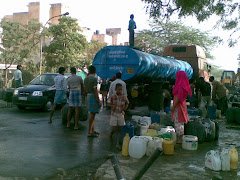.jpg)