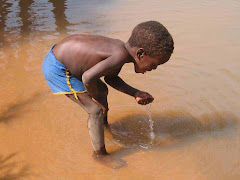
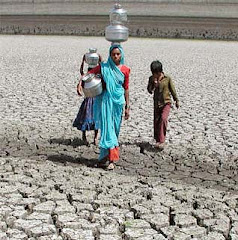
It has now been proven often enough that disputes arising over water are growing. In India, transboundary water problems are also rising.
For once, the Indian government seems to have taken a proactive approach. The Water Resources Ministry is mulling setting up an integrated water disputes tribunal that will become the one-stop forum to deal with all inter-state water disputes in the country.
The move is expected to save the Ministry time and effort in setting up separate tribunals as and when water disputes erupt between states, besides ensuring uniformity in awards, without inviting any political protests.
Over the past few years, similar tribunals have been set up for several sectors, including power and telecom. They have functioned well despite limitations.
Since water, or lack of it, is now turning out to be a cause for concern, the timing could not be better. Water disputes are expected to rise with erach passing year.
Already, there are five tribunals in India, one each for the Ravi-Beas dispute between Haryana, Rajasthan and Punjab; Krishna dispute between Maharashtra, Karnataka and Andhra Pradesh; Cauvery dispute between Karnataka, Tamil Nadu, Pondicherry and Kerala; Vansdhara dispute between Andhra Pradesh and Orissa and, the Mahedyi dispute between Karnataka, Maharashtra and Goa.
To set up an integrated tribunal would not be an easy task. It would also take several months. Afterall, there have to be discussions on the integrated tribunal.
Also, it would require an amendment of the Inter-State Water Disputes Act 1956. The whole process could take over a a year to complete as it requires several clearances and amendments.
Experts have suggested that at the same time, there should be an effort to develop and strengthen an alternate disputes resolution mechanism so that whenever the tribunal is set up, it does not get inundated with unnecessary disputes.
Showing posts with label Tribunal. Show all posts
Showing posts with label Tribunal. Show all posts
Friday, February 11, 2011

Friday, January 14, 2011
Krishna water dispute verdict given; no end seen to feud though
This verdict has taken 40 years to be delivered, but, all the stakeholders are still not happy.
One of India's oldest and biggest inter-state river water disputes, involving sharing of the Krishna River water among the states of Maharashtra, Karnataka and Andhra Pradesh has ended after almost 43 years. The Krishna Tribunal, in its judgment recently, distributed the water among all three riparian states in the Deccan plateau .
But, the dispute seems to be over only on paper and has become even more politicized.
Soon after the verdict, which was delivered just before the new year, voices of discontent have started to emerge with Andhra Pradesh state government saying that it would likely file an appeal before the Tribunal as it was not satisfied with the verdict on sharing of surplus water with the other two neighbouring states.
The issue has united almost all political parties in Andhra Pradesh. The major concern is that the Brijesh Kumar Tribunal's permission to Karnataka to raise the height of Alamatti dam from 519 to 524.25 metres would affect kharif crop in over 13.5 lakh acres in rice-rich Krishna delta.
Andhra Pradesh Chief Minister N Kiran Kumar Reddy indicated the state would go for an appeal within the stipulated time against the issues that are not beneficial to the state.
The Tribunal in its award made a firm allocation of 1001 TMC FT of water to AP, an increase of 190 TMC FT than earlier. But, the state had to forego its sole right over utilisation of surplus water as the Tribunal made proportionate allocation to the other two states -- Maharashtra and Karnataka, as well in surplus water. This would deprive AP of use of 190 TMC FT of surplus water.
Also, the reduction in the share of surplus water will adversely affect several irrigation projects in the state. Andhra Pradesh was earlier allowed to use the entire surplus water but under the new tribunal, it has been distributed among three states.
The Tribunal has given Karnataka 911 TMC FT and Maharashtra 666 TMC FT.
Opposition parties of Andhra Pradesh had decided to protest against the Krishna River Water Disputes Tribunal's award in national Capital New Delhi on January 9 on sharing of river water between the states. The parties had adopted a resolution denouncing the permission granted to Karnataka for increasing the height of Alamatti dam from 519 meters to 524.25 meters, as it was detrimental to the interests of the lower riparian state.
The parties wanted the state to ensure that Andhra Pradesh alone got the sole right over utilisation of surplus water from river Krishna.
The parties have also decided to build people’s movement from the grass-root level to bring pressure on the federal government besides taking legal recourse to undo the injustice.
The judgment has taken over four decades to be delivered. I wonder how long it would now take to arrive at a complete solution to the problem of water sharing?
One of India's oldest and biggest inter-state river water disputes, involving sharing of the Krishna River water among the states of Maharashtra, Karnataka and Andhra Pradesh has ended after almost 43 years. The Krishna Tribunal, in its judgment recently, distributed the water among all three riparian states in the Deccan plateau .
But, the dispute seems to be over only on paper and has become even more politicized.
Soon after the verdict, which was delivered just before the new year, voices of discontent have started to emerge with Andhra Pradesh state government saying that it would likely file an appeal before the Tribunal as it was not satisfied with the verdict on sharing of surplus water with the other two neighbouring states.
The issue has united almost all political parties in Andhra Pradesh. The major concern is that the Brijesh Kumar Tribunal's permission to Karnataka to raise the height of Alamatti dam from 519 to 524.25 metres would affect kharif crop in over 13.5 lakh acres in rice-rich Krishna delta.
Andhra Pradesh Chief Minister N Kiran Kumar Reddy indicated the state would go for an appeal within the stipulated time against the issues that are not beneficial to the state.
The Tribunal in its award made a firm allocation of 1001 TMC FT of water to AP, an increase of 190 TMC FT than earlier. But, the state had to forego its sole right over utilisation of surplus water as the Tribunal made proportionate allocation to the other two states -- Maharashtra and Karnataka, as well in surplus water. This would deprive AP of use of 190 TMC FT of surplus water.
Also, the reduction in the share of surplus water will adversely affect several irrigation projects in the state. Andhra Pradesh was earlier allowed to use the entire surplus water but under the new tribunal, it has been distributed among three states.
The Tribunal has given Karnataka 911 TMC FT and Maharashtra 666 TMC FT.
Opposition parties of Andhra Pradesh had decided to protest against the Krishna River Water Disputes Tribunal's award in national Capital New Delhi on January 9 on sharing of river water between the states. The parties had adopted a resolution denouncing the permission granted to Karnataka for increasing the height of Alamatti dam from 519 meters to 524.25 meters, as it was detrimental to the interests of the lower riparian state.
The parties wanted the state to ensure that Andhra Pradesh alone got the sole right over utilisation of surplus water from river Krishna.
The parties have also decided to build people’s movement from the grass-root level to bring pressure on the federal government besides taking legal recourse to undo the injustice.
The judgment has taken over four decades to be delivered. I wonder how long it would now take to arrive at a complete solution to the problem of water sharing?
Subscribe to:
Posts (Atom)

.jpg)