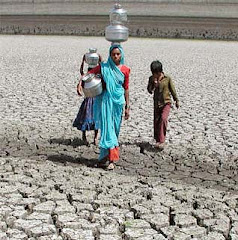
A committee set up by Indian Prime Minister Manmohan Singh has said the country would require investments to the tune of Rs 8,00,000 crore over the next 20 years to provide basic infrastructure services like water, wastewater and solid waste management.
To those who think the investment as huge, it would come as a surprise that this amount is about 20 per cent of the overall Rs 39.2 lakh crore (trillion) that the committee has said would be required to improve all basic urban infrastructure services during the next two decades.
Along with the investment, the government would need to undertake "major administrative reforms" to cope with the current rate of urbanization, said the high-powered expert committee (HPEC) on urban infrastructure led by one of India's leading economists Isher Judge Ahluwalia.
The body was formed by the Prime Minister in 2008 to estimate investment requirement for urban infrastructure services in the country. The committee submitted its report to Union Urban Development Minister Kamal Nath on March 7.
The committee recommended a regulatory regime for urban services at state levels to address challenges of not only pricing services correctly but also ensuring delivery of services and protection of the environment besides encouraging public private participation in service delivery.
In India, just about 64 per cent of urban population in India is covered by individual water connections compared with 91 per cent in China, 86 per cent in South Africa and 80 per cent in Brazil.
India's urban population is expected to increase from existing 350 million to 600 million by 2031. This population increase is expected to further put pressure in the country's dwindling water resources and the per capita water availability is expected to come down further from about 1730 cubic metre now to about 1240 by 2030.
The rapid growth of urbanization has compounded the problem of water scarcity in several Indian cities, where current demand is much higher than the supply. This has prompted several state governments to undertake water projects that seek to enhance supply for the growing population.
Indian companies in the water industry and even those with exposure to it should find this huge investment requirement an opportunity. The Government alone cannot come up with such huge amounts on its own.
This should clear the way for further participation from the private sector in the water industry, fast eing considered a sunrise industry by many. Public-private partnerships (PPP) should become the order of the day.
Showing posts with label water investment. Show all posts
Showing posts with label water investment. Show all posts
Tuesday, March 15, 2011

Wednesday, January 5, 2011
Are PE funds shying away from water in India?
Is the water industry in India losing its sheen for the private equity fraternity? Though, it is too early to say so, there are indications that PE deals are certainly drying up.
This could, though, also be due to the fact that PE funds are becoming choosy. And, good companies to make investments in are not coming up on their radar very often.
The growing water technology and management sector witnessed a sharp drop in private equity investments during 2010 as against 2009, with only two deals reported till December as against four during 2009.
Thankfully, PE funds say the sector still remains lucrative and will see more investments in the coming months.
In terms of investments, private equity funds, which include venture capitalists as a subset, invested only $23 million USD in Indian water technology and management companies. This is almost one-third of the $66 million USD they invested during 2009.
Without reading too much in the statistics (as one PE fund advised), the feeling is that the sector has the depth to productively absorb more capital and over the next several months, the industry will continue to be a growth driver.
This could, though, also be due to the fact that PE funds are becoming choosy. And, good companies to make investments in are not coming up on their radar very often.
The growing water technology and management sector witnessed a sharp drop in private equity investments during 2010 as against 2009, with only two deals reported till December as against four during 2009.
Thankfully, PE funds say the sector still remains lucrative and will see more investments in the coming months.
In terms of investments, private equity funds, which include venture capitalists as a subset, invested only $23 million USD in Indian water technology and management companies. This is almost one-third of the $66 million USD they invested during 2009.
Without reading too much in the statistics (as one PE fund advised), the feeling is that the sector has the depth to productively absorb more capital and over the next several months, the industry will continue to be a growth driver.
Tuesday, December 15, 2009
Water, a safe investment option.
The global water sector would remain a safe investment choice during 2010 and for several years beyond, a US-based investment management firm has said.
The consultancy, which tracks the water sector, and some of its top companies regularly, has identified water conservation and efficiency, recycling and reuse as the hot areas of investment in the sector.
A report from Summit Global Management entitled 'The Case for Water Equity Investing 2010' has stated that water being an underestimated resource, many might not realise that it represents the "world's third biggest (industry sector) in terms of embedded capital behind only oil & gas and electrical power", and the global market is estimated to be $500 billion per year.
The report said that the global economic crisis will undoubtedly impact the volume and rate of investment going into hydrocommerce in the near term. But the investment side of the industry has certainly evolved over the last 25 years, and the changes are virtually all positive.
Given the compelling, recession-resistant business model, combined with the urgency of water challenges across the globe, the consultancy is of the view that the outlook for water stocks today is much better than it was 25 years ago, or even five ago. Hydrocommerce will undoubtedly remain one of the world’s most vital industries, and will continue to offer some of the best risk/reward characteristics to the intelligent long-term investor, it added.
The findings of the report come as a shot in the arm for those looking at water as an investment option. Water scarcity is now a global issue. Going ahead, as climate changes come into play more strongly and affect supplies, population growth raises demand and pollution eats into already-scarce resources, it would be a profitable industry for those who come up with viable solutions.
The consultancy, which tracks the water sector, and some of its top companies regularly, has identified water conservation and efficiency, recycling and reuse as the hot areas of investment in the sector.
A report from Summit Global Management entitled 'The Case for Water Equity Investing 2010' has stated that water being an underestimated resource, many might not realise that it represents the "world's third biggest (industry sector) in terms of embedded capital behind only oil & gas and electrical power", and the global market is estimated to be $500 billion per year.
The report said that the global economic crisis will undoubtedly impact the volume and rate of investment going into hydrocommerce in the near term. But the investment side of the industry has certainly evolved over the last 25 years, and the changes are virtually all positive.
Given the compelling, recession-resistant business model, combined with the urgency of water challenges across the globe, the consultancy is of the view that the outlook for water stocks today is much better than it was 25 years ago, or even five ago. Hydrocommerce will undoubtedly remain one of the world’s most vital industries, and will continue to offer some of the best risk/reward characteristics to the intelligent long-term investor, it added.
The findings of the report come as a shot in the arm for those looking at water as an investment option. Water scarcity is now a global issue. Going ahead, as climate changes come into play more strongly and affect supplies, population growth raises demand and pollution eats into already-scarce resources, it would be a profitable industry for those who come up with viable solutions.
Wednesday, November 11, 2009
Another PE fund eyes India water industry
The growing scarcity of water in India and China is attracting several private investors. As the two leading economies battle growing water shortages and runaway pollution of water resources, soem of these PE funds are sensing a growing potential in services and technologies that present solutions to these problems.
The latest among the long list of private investors in the water industry is PE firm Olympus Capital that has closed a $250 million Asia fund that seeks to make investments in the waste management, water quality treatment infrastructure and clean energy sectors in the two countries.
Betweem them, India and China have enough people to present a huge market, perhaps bigger than any other market. So, Asia's third and second largest economies, in this order, remain on the investment radar of investors looking for opportunities in the sector that is already seeing a lot of action.
Olympus' fund, Asia Environmental Partners LP, has received commitments from several quarters including the private lending arm of World Bank, International Finance Corporation (IFC). The fund intends to focus on equipment and services companies engaged in water management and energy efficiency.
Olympus is reportedly exploring opportunities that call for investments ranging from $20 million USD to $100 million USD. Its immediate focus would be on energy efficiency and water management, besides municipal solid waste management.
Despite the growing interest of investors in the Indian water industry, it has remained largely devoid of any big ticket private equity deals. As a result, most of the companies in the sector, particularly the small and medium-sized ones, have depended on traditional routes of fund raising, including borrowings and going public.
However, now that several water-focused funds and private equity vehicles have announced investment plans, the water sector would see a lot of activity.
Hopefully, in the process, some long-term solutions and technologies would get available to the masses.
The latest among the long list of private investors in the water industry is PE firm Olympus Capital that has closed a $250 million Asia fund that seeks to make investments in the waste management, water quality treatment infrastructure and clean energy sectors in the two countries.
Betweem them, India and China have enough people to present a huge market, perhaps bigger than any other market. So, Asia's third and second largest economies, in this order, remain on the investment radar of investors looking for opportunities in the sector that is already seeing a lot of action.
Olympus' fund, Asia Environmental Partners LP, has received commitments from several quarters including the private lending arm of World Bank, International Finance Corporation (IFC). The fund intends to focus on equipment and services companies engaged in water management and energy efficiency.
Olympus is reportedly exploring opportunities that call for investments ranging from $20 million USD to $100 million USD. Its immediate focus would be on energy efficiency and water management, besides municipal solid waste management.
Despite the growing interest of investors in the Indian water industry, it has remained largely devoid of any big ticket private equity deals. As a result, most of the companies in the sector, particularly the small and medium-sized ones, have depended on traditional routes of fund raising, including borrowings and going public.
However, now that several water-focused funds and private equity vehicles have announced investment plans, the water sector would see a lot of activity.
Hopefully, in the process, some long-term solutions and technologies would get available to the masses.
Subscribe to:
Posts (Atom)

.jpg)