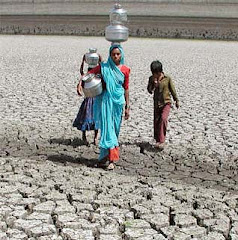
As water pollution continues to play havoc with the world's dwindling water supplies, the search for innovative and low-cost purification technologies continues.
Some Canadian researchers have come across a tree found in several parts of Asia that could also provide another low-cost water purification technique to help bring down the incidence of waterborne disease in the developing world. This could be welcome news for Asia, as along with Africa, it remains one of the largest areas where water scarcity and pollution run hand-in-hand.
If one adds some parts of Latam (Latin America), then over a billion people reportedly rely on untreated surface water sources for their daily water needs. Reports suggest that almost two million die from diseases from contaminated water every year. Children under five years of age account for the largest number of deaths.
According to the researchers, a simple procedure that uses seeds from the Moringa oleifera tree can produce upto 99.99 per cent bacterial reduction in previously untreated water.
The seeds can be crushed into powder and used as a water-soluble extract in suspension, which creates an effective natural clarification agent for highly turbid and untreated pathogenic surface water.
The technique improves drinkability and reduces water turbidity (cloudiness), thus making water microbiologically and aesthetically acceptable for human consumption.
Showing posts with label water pollution. Show all posts
Showing posts with label water pollution. Show all posts
Wednesday, April 14, 2010

Monday, February 15, 2010
Amnesty International accuses India’s Vedanta of water pollution
Global human rights group Amnesty International has accused London-based metals and mining group Vedanta for alleged poor waste management practices at its aluminium refinery in India's eastern state of Orissa, which has hit the supply of water locally.
Amnesty has said the refinery is causing water and air pollution that is threatening health of thousands of locals in the state. However, Vedanta has refuted the claim and said they were based on an "outdated document".
The international rights group on February 10 released a report, alleging that the 8,000 strong tribal community near the refinery suffered violations of human rights to water and health. The report, which quoted documents from Orissa State Pollution Control Board gave instances where vedanta failed to put in place adequate pollution controls.
This resulted in leakages of alkaline wastewater into the river, the main source of water in the area. People in Niyamgiri Hills, where the company mines alumina, had complained of serious skin ailments, hazards that were not witnessed before the mining began, said Amnesty.
According to Amnesty, these complaints are likely rooted in the periodic contamination of Vansadhara river, the main water source for the people and possible seapage of toxic elements into ground water from a highly alkaline waste known as red mud pond.
The Amnesty-Vadanta stand-off comes soon after an Indian Government report has called for an urgent upgrade of the country's wastewater treatment facilities, stating that most of the Indian cities have been managing to treat their wastewater only partially and the untreated waste is flowing back into rivers that form major sources of drinking water.
The discharge of untreated sewage into water courses is the biggest source of water pollution in India, the report released last month by state-run Central Pollution Control Board (CPCB) had said.
Vedanta has charted plans to pour more investment in the refinery and expand its capacity six-fold. The expansion is expected to deliver significant economic stimulus to the local community, especially historically underdeveloped areas of Orissa, the company said.
Amnesty has reportedly urged the Indian government not to approve the expansion until pollution laws were enforced, the health impact investigated and the waste management process rectified by the refinery.
Vedanta, on the other hand, said the criticism of the project is misplaced and repeated offers made by the company to Amnesty to enter into a dialogue on the report had been rejected.
Amnesty has said the refinery is causing water and air pollution that is threatening health of thousands of locals in the state. However, Vedanta has refuted the claim and said they were based on an "outdated document".
The international rights group on February 10 released a report, alleging that the 8,000 strong tribal community near the refinery suffered violations of human rights to water and health. The report, which quoted documents from Orissa State Pollution Control Board gave instances where vedanta failed to put in place adequate pollution controls.
This resulted in leakages of alkaline wastewater into the river, the main source of water in the area. People in Niyamgiri Hills, where the company mines alumina, had complained of serious skin ailments, hazards that were not witnessed before the mining began, said Amnesty.
According to Amnesty, these complaints are likely rooted in the periodic contamination of Vansadhara river, the main water source for the people and possible seapage of toxic elements into ground water from a highly alkaline waste known as red mud pond.
The Amnesty-Vadanta stand-off comes soon after an Indian Government report has called for an urgent upgrade of the country's wastewater treatment facilities, stating that most of the Indian cities have been managing to treat their wastewater only partially and the untreated waste is flowing back into rivers that form major sources of drinking water.
The discharge of untreated sewage into water courses is the biggest source of water pollution in India, the report released last month by state-run Central Pollution Control Board (CPCB) had said.
Vedanta has charted plans to pour more investment in the refinery and expand its capacity six-fold. The expansion is expected to deliver significant economic stimulus to the local community, especially historically underdeveloped areas of Orissa, the company said.
Amnesty has reportedly urged the Indian government not to approve the expansion until pollution laws were enforced, the health impact investigated and the waste management process rectified by the refinery.
Vedanta, on the other hand, said the criticism of the project is misplaced and repeated offers made by the company to Amnesty to enter into a dialogue on the report had been rejected.
Tuesday, December 8, 2009
India's Tatas make foray in low-cost water purifier market
India's leading corporate Tata Group has launched a new low-cost water purifier targeted at the rural masses. The water filter is designed to be used in rural households that have no electricity or running water and would use ash from rice milling to filter out bacteria. The business group hopes it will provide safe drinking water for millions and cut the toll of deadly diseases.
The low-cost purifier will cost around Rs 1000 (or about $22) and should find easy acceptance among people in rural India. It's, of course, another matter that there are thousands of villages across India where water is just not available.
The scourge of water pollution not only affects India, but the entire world. According to the United Nations, more than one in six people worldwide, or 894 million, do not have access to clean water for their basic needs. Diarrhoea remains the leading cause of illness and death, particularly among children.
Nearly 90 per cent of deaths from diarrhoea are due to lack of sanitation, unsafe drinking water and water for hygiene. In India, 75 per cent of the rural population does not have access to safe drinking water.
The Tatas have befittingly called the new product Swatch (meaning pure, clear in Hindi). The product has come up after the group carried out extensive research. The group has reportedly invested Rs 1 billion in the project and set a target of selling three million units in the next five years.
A low-cost product is not new to the Indian market. The home water purification industry in India is a buoyant one and there are already several players, as also a few more low-cost water purifiers in the market. FMCG giant Hindustan Unilever had also rolled out its battery-operated Pureit model, which has a 4.5-litre capacity and can filter up to 1,500 litres.
Tata's Swatch has a 9.5-litre capacity and can filter 3,000 litres until the cartridge has to be replaced. The device uses tiny silver particles to kill harmful germs that can lead to diseases like diarrhoea, cholera and typhoid, something quite common in India.
The device meets the highest US Environmental Protection Agency standards and also removes micro-organisms, colour and odour. The group had tested it in 600 rural households across four Indian states before it was launched.
The low-cost water purifier market is expected to see some more roll-outs and product innovations in the years to come as water scarcity and pollution grow. It would also be a prudent business decision for all those in the industry, as the bottom of the pyramid offers a huge, huge potential market.
The low-cost purifier will cost around Rs 1000 (or about $22) and should find easy acceptance among people in rural India. It's, of course, another matter that there are thousands of villages across India where water is just not available.
The scourge of water pollution not only affects India, but the entire world. According to the United Nations, more than one in six people worldwide, or 894 million, do not have access to clean water for their basic needs. Diarrhoea remains the leading cause of illness and death, particularly among children.
Nearly 90 per cent of deaths from diarrhoea are due to lack of sanitation, unsafe drinking water and water for hygiene. In India, 75 per cent of the rural population does not have access to safe drinking water.
The Tatas have befittingly called the new product Swatch (meaning pure, clear in Hindi). The product has come up after the group carried out extensive research. The group has reportedly invested Rs 1 billion in the project and set a target of selling three million units in the next five years.
A low-cost product is not new to the Indian market. The home water purification industry in India is a buoyant one and there are already several players, as also a few more low-cost water purifiers in the market. FMCG giant Hindustan Unilever had also rolled out its battery-operated Pureit model, which has a 4.5-litre capacity and can filter up to 1,500 litres.
Tata's Swatch has a 9.5-litre capacity and can filter 3,000 litres until the cartridge has to be replaced. The device uses tiny silver particles to kill harmful germs that can lead to diseases like diarrhoea, cholera and typhoid, something quite common in India.
The device meets the highest US Environmental Protection Agency standards and also removes micro-organisms, colour and odour. The group had tested it in 600 rural households across four Indian states before it was launched.
The low-cost water purifier market is expected to see some more roll-outs and product innovations in the years to come as water scarcity and pollution grow. It would also be a prudent business decision for all those in the industry, as the bottom of the pyramid offers a huge, huge potential market.
Subscribe to:
Posts (Atom)

.jpg)