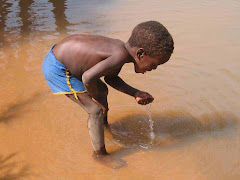
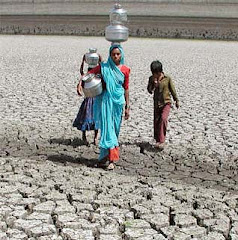
It seems the Delhi Jal Board (DJB) has a lot to do this summer besides struggling to supply water to the residents of the capital city. On its agenda are issues of groundwater decline and supply of contaminated water to certain areas across the city.
Very soon, the state-run water utility is expected to reply to a notice it was issued by the National Human Rights Commission (NHRC) last month on supply of contaminated water in the national Capital.
NHRC has asked the DJB chief to submit a detailed report within four weeks, explaining the measures being taken to ensure potable water supply to the city's people.
The notice by NHRC came in the wake of a survey jointly conducted by DJB and the Municipal Corporation of Delhi (MCD) that revealed that 67 major water pipelines out of the 200 areas examined had cracks in them and were being contaminated by sewage.
Also, the pipelines were quite old and some in old Delhi including Chandni Chowk are almost 100 years old and have rusted, leading to major leakages.
The joint survey also stated that many residential colonies in Delhi had been getting contaminated water and the dangers posed by it are manifold as it may cause a variety of ailments including viral infection, hepatitis E, typhoid, cholera, jaundice, among others.
The issue of water contamination is certainly not new in the city. In fact, almost every year, reports emerge of colonies across the cities getting contaminated water. DJB often raises its hands, expressing its helplessness in the wake of mounting costs to run its huge operations. The reported 40 per cent non-revenue water (NRW) that the utility has does not help its case.
One has only to take a closer look at the city's water infrastructure to see a picture of neglect and apathy. Pipelines, even in the poshest of colonies, are rusting and leaking. Wastewater and solid waste can be found along the water pipelines that carry water that DJB calls potable.
No wonder, Delhi, like several other cities in India, is a major market for home-based water treatment systems makers.
A NHRC spokesperson had said in August, "The Commission is deeply concerned with the hazards posed to the citizens of Delhi due to supply of contaminated water. The Commission observed that the contents of the report, if true, amounts to serious violation of right to health of the people of Delhi".
MCD has said that water contamination is not just restricted to a few pockets of the city and has been found along with damaged pipelines in all 12 municipal zones in the city. Also, as many as 642 water pipelines of DJB are passing through drains and becoming a public hazard.
Delhi Jal Board CEO Ramesh Negi has admitted there is an issue of water contamination in certain areas in the city.
One possible solution, says Negi, lies in making "dedicated utility corridors" on the lines of other international cities where there are separate corridor s for electricity lines, water lines, and sewer lines.
DJB tackles a huge network of over 14,000 km of pipelines and 700 km of water mains and rest peripheral lines. As the city grows and demand for water grows, the DJB would have to push for solutions that are long-lasting. It would need to make serious efforts to bring down NRW and boost its revenues.
It has also to make efforts to arrest the decline in groundwater in the city. It was asked by the Delhi government to probe the drastic decline in groundwater levels across the city.
DJB has also been directed against permitting the digging of new borewells in the city till February 2012.
The move follows a missive from the Central Ground Water Authority (CGWA) that warned that several areas in Delhi, particularly south and southwest districts, had seen a decline in groundwater levels due to as many as 350 permissions being given in 2010-11 for extraction of groundwater by way of constructing borewells and tube wells across Delhi.
The first step to tackle this problem would be to stop succumbing to political pressure. The water utility has been under constant pressure from MLAs to clear borewell projects for their respective constituencies. It's time this practice is stopped.
Also, DJB would need to coordinate better with the Delhi government's revenue department and the Delhi Police. Regulation and monitoring of groundwater resources is supposed to have been a joint effort between the three departments.
Showing posts with label groundwater. Show all posts
Showing posts with label groundwater. Show all posts
Tuesday, September 6, 2011

Thursday, April 21, 2011
Plan panel suggests cap, tax on groundwater usage
India's groundwater resources are vanishing. And, at a rate that is being considered far too dangerous for a country which has perhaps the highest rates of extraction of groundwater.
Agriculture remains the major recipient of groundwater.
The Indian government is now thinking of bringing in a cap and a tax on groundwater usage so that its indiscriminate use for irrigation is discouraged. The move is expected to help preserve the fast depleting groundwater levels across the country.
The Planning Commission is working on a new groundwater bill and water framework law for the Twelfth Five-Year Plan period that begins next year. The bill is expected to include several other sweeping changes to arrest the decline in groundwater levels.
Planning Commission Member Mihir Shah recently made a presentation to Prime Minister Manmohan Singh in which he suggested that without legal reform, "mining of groundwater will be impossible to control".
Over-extraction of groundwater has lowered the water table to dangerous levels across several states, the mid-term appraisal report of the Eleventh Five-year Plan has warned.
Last year, a World Bank report too had also warned that overexploitation of groundwater in India was rampant and 60 per cent of all aquifers in the country could run dry in 20 years or will be in a critical condition.
A Central law that regulates groundwater usage is much needed. But, it will not be an easy task. There are several laws governing water in India. And, water remains a state subject too.
Political compulsions could undermine a move to bring harmony on this front. But, a beginning has to be made.
ON its part, Planning Commission has suggested that a National Water Commission, a central regulator monitoring investment clearances for water projects, should be set up to affectively gauge and incentivize state compliance.
Some states are already charging for irrigation from canals and dams and use the money for maintenance work. But, groundwater usage remains largely out of tax ambit in several states.
Agriculture remains the major recipient of groundwater.
The Indian government is now thinking of bringing in a cap and a tax on groundwater usage so that its indiscriminate use for irrigation is discouraged. The move is expected to help preserve the fast depleting groundwater levels across the country.
The Planning Commission is working on a new groundwater bill and water framework law for the Twelfth Five-Year Plan period that begins next year. The bill is expected to include several other sweeping changes to arrest the decline in groundwater levels.
Planning Commission Member Mihir Shah recently made a presentation to Prime Minister Manmohan Singh in which he suggested that without legal reform, "mining of groundwater will be impossible to control".
Over-extraction of groundwater has lowered the water table to dangerous levels across several states, the mid-term appraisal report of the Eleventh Five-year Plan has warned.
Last year, a World Bank report too had also warned that overexploitation of groundwater in India was rampant and 60 per cent of all aquifers in the country could run dry in 20 years or will be in a critical condition.
A Central law that regulates groundwater usage is much needed. But, it will not be an easy task. There are several laws governing water in India. And, water remains a state subject too.
Political compulsions could undermine a move to bring harmony on this front. But, a beginning has to be made.
ON its part, Planning Commission has suggested that a National Water Commission, a central regulator monitoring investment clearances for water projects, should be set up to affectively gauge and incentivize state compliance.
Some states are already charging for irrigation from canals and dams and use the money for maintenance work. But, groundwater usage remains largely out of tax ambit in several states.
Monday, April 5, 2010
PepsiCo to provide water to 3 million people by 2015
Cola major PepsiCo has unveiled global plans to provide access to safe water to three million people in developing countries by 2015. The company has also announced plans to bring down its water consumption in production.
PepsiCo announced recently that it would continue to make efforts to arrive at positive water balance in its operations in water-distressed areas.
It will be a welcome step as the company, along with its main rival Coca Cola, has often been accused of exploitation of water resources around some of its manufacturing plants. The two cola majors have been under intense pressure in India, where they have both been separately announcing plans to arrive at a positive water balance -- recharging water levels in areas where their plants have become controversial as much as they have been taking from the soil.
The company said during 2011, the PepsiCo Foundation will reach its goal of providing access to safe water and sanitation to 1 million people through support of several partners. It has been working with several partners, spread across countries, in projects that seek to enhance access to water and sanitation facilities to local communities.
A statement issued by the company said it had set a global goal in 2007 to reduce water consumption by 20 per cent per unit of production by 2015. To date, the company has achieved a more than 15 per cent improvement in water use efficiency as compared to the company's 2006 baseline, it added.
Some of its global partners include Water.org, Safe Water Network, The Energy Resources Institute, China Women's Development Foundation and the Earth Institute at Columbia University. Together, they have been helping install village water and irrigation systems, establishing water health centers, constructing rainwater harvesting cisterns, improve sanitation programs and recharge aquifers in developing communities, particularly in Ghana, Kenya, Brazil, China and India.
The announcements by the company come against a backdrop of increased focus of corporate role in sustainable development. Companies are now being held accountable for mismanagement of water resources, particularly in water-starved regions.
PepsiCo announced recently that it would continue to make efforts to arrive at positive water balance in its operations in water-distressed areas.
It will be a welcome step as the company, along with its main rival Coca Cola, has often been accused of exploitation of water resources around some of its manufacturing plants. The two cola majors have been under intense pressure in India, where they have both been separately announcing plans to arrive at a positive water balance -- recharging water levels in areas where their plants have become controversial as much as they have been taking from the soil.
The company said during 2011, the PepsiCo Foundation will reach its goal of providing access to safe water and sanitation to 1 million people through support of several partners. It has been working with several partners, spread across countries, in projects that seek to enhance access to water and sanitation facilities to local communities.
A statement issued by the company said it had set a global goal in 2007 to reduce water consumption by 20 per cent per unit of production by 2015. To date, the company has achieved a more than 15 per cent improvement in water use efficiency as compared to the company's 2006 baseline, it added.
Some of its global partners include Water.org, Safe Water Network, The Energy Resources Institute, China Women's Development Foundation and the Earth Institute at Columbia University. Together, they have been helping install village water and irrigation systems, establishing water health centers, constructing rainwater harvesting cisterns, improve sanitation programs and recharge aquifers in developing communities, particularly in Ghana, Kenya, Brazil, China and India.
The announcements by the company come against a backdrop of increased focus of corporate role in sustainable development. Companies are now being held accountable for mismanagement of water resources, particularly in water-starved regions.
Thursday, April 1, 2010
India launches Web-enabled groundwater information system
The Indian government has launched a Web-enabled information system that will allow all stakeholders to access information about groundwater availability acrosss the country seamlessly.
The system was jointly developed by Central Ground Water Board (CGWB), which is under the administrative control of the Water Resources Ministry, and the National Informatics Centre (NIC).
Launching the system on World Water Day on March 22, India's Union Minister for Water Resources Pawan Kumar Bansal said the system would provide all the stakeholders access to various thematic layers as well as the nationwide database generated by CGWB on groundwater level and water quality.
The initiative would help more effective sharing of information relating to groundwater resource availability and water level trend with user groups, planners and administrators, he added.
The Online system comes at a time when India's groundwater resources are dwindling at a fast pace. In several blocks across the country, the rate of extraction of groundwater is increasing and exceeds the rate of recharge, leading to lowered water tables. Experts have cautioned that over-exploitation of aquifers is also likely to hit the fragile ecosystems.
Bansal urged all Federal and state government departments which are repositories of groundwater data to come forward to pool it on the Web-based knowledge platform for the benefit of all stakeholders.
The system would initially be available in Government-to-Government (G2G) domain for planning and decision-making for management of groundwater resources. later on, the system will allow groundwater information availability to people and all organizations. It would allow, for instance, a farmer to access groundwater information for his village through the e-kiosks that are being set up across the country.
Groundwater remains India’s water lifeline and well over 85 per cent of rural water supply comes from it. Also, as much as half of the urban and industrial water supply too comes from groundwater systems.
The Indian Government has been making efforts to strengthen groundwater resource management system in the country and had in late 2008 announced the launch of a new scheme -- Ground Water Management and Regulation -- after merging three existing ones into a comprehensive one. The scheme, which had an outlay of Rs 460 crore, was also expected to help in delineating groundwater development worthy areas and developing area specific artificial recharge and rain water harvesting techniques.
The system was jointly developed by Central Ground Water Board (CGWB), which is under the administrative control of the Water Resources Ministry, and the National Informatics Centre (NIC).
Launching the system on World Water Day on March 22, India's Union Minister for Water Resources Pawan Kumar Bansal said the system would provide all the stakeholders access to various thematic layers as well as the nationwide database generated by CGWB on groundwater level and water quality.
The initiative would help more effective sharing of information relating to groundwater resource availability and water level trend with user groups, planners and administrators, he added.
The Online system comes at a time when India's groundwater resources are dwindling at a fast pace. In several blocks across the country, the rate of extraction of groundwater is increasing and exceeds the rate of recharge, leading to lowered water tables. Experts have cautioned that over-exploitation of aquifers is also likely to hit the fragile ecosystems.
Bansal urged all Federal and state government departments which are repositories of groundwater data to come forward to pool it on the Web-based knowledge platform for the benefit of all stakeholders.
The system would initially be available in Government-to-Government (G2G) domain for planning and decision-making for management of groundwater resources. later on, the system will allow groundwater information availability to people and all organizations. It would allow, for instance, a farmer to access groundwater information for his village through the e-kiosks that are being set up across the country.
Groundwater remains India’s water lifeline and well over 85 per cent of rural water supply comes from it. Also, as much as half of the urban and industrial water supply too comes from groundwater systems.
The Indian Government has been making efforts to strengthen groundwater resource management system in the country and had in late 2008 announced the launch of a new scheme -- Ground Water Management and Regulation -- after merging three existing ones into a comprehensive one. The scheme, which had an outlay of Rs 460 crore, was also expected to help in delineating groundwater development worthy areas and developing area specific artificial recharge and rain water harvesting techniques.
Subscribe to:
Posts (Atom)

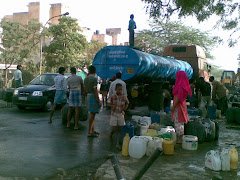.jpg)