Several of the world's largest corporations, some with operations spanning several countries, have been urged to disclose their complete water usage and participate in the first voluntary water-disclosure exercise being undertaken at a global scale by London-based investor-backed non-profit organization Carbon Disclosure Project (CDP).
The CDP issued the first of its kind water-disclosure questionnaire last week in London and began a campaign that seeks to put water consumption on par with carbon emissions as a concern of company shareholders. The organization had scheduled for release of the questionnaire around this time when it launched the initiaitve around November last year.
The exercise is purely voluntary and those who have been approached may not respond. But, they are being encouraged by a pool of investors that brings with it formidable wealth, to do so. The investors represent some $16000 billion worth of assets between themselves.
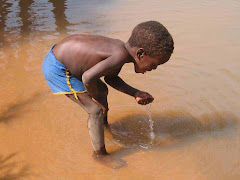
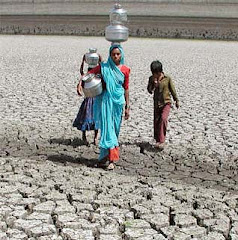
The initiative comes against a backdrop of declining global water availability creating an immense challenge for companies, and a demand for increasing accountability on usage of the fast depleting resource. In fact, several reports have highlighted that poor water availability as well as an increase in its procurement cost is emerging a formidable business risk.
Several projections point out that in several areas across the world, water may not just be available to run business operations in the not so distant future. At the same time, experts have been issuing stern warnings that companies, and their investors, should start to appreciate the new category of risk to their future businesses -- running out of water.
Projects like CDP's not only manage to create awareness and help businesses and institutional investors understand the risks and opportunities associated with water scarcity and other water-related issues, but at the same time, give a unstated warning to most companies operating in water-intensive sectors.
The 302 companies asked to send in their responses by July-end include the who's who of the global business world -- ABB, Nokia, Intel, Procter & Gamble, Bayer, Boeing, Cadbury, Carrefour, Christian Dior, Danone, IBM, Johnson & Johnson, Coca-Cola, Nestle, Unilever, PepsiCo, McDonald's, Nike, Novartis, Sony Corporation, Yum Brands, among others.
Ford, PepsiCo, Molson Coors, L’Oréal and Reed Elsevier, some of whom are involved in the project in various capacities, are among those who have already accepted to respond.
Indian companies that have been sent the questionnaire are Bharat Heavy Electricals LTD (BHEL), Indian Oil, ITC, Larsen & Toubro, NTPC, ONGC, Reliance Industries, Steel Authority of India Ltd (SAIL). There is also Arcelor Mittal, the global steel giant of India-born LN Mittal.
The questionnaire asks the respondents to spell out if they have a water policy, strategy or management plan. And, if they have one, then it asks comanies to describe it.
It also asks respondents to identify the percentage of their operations in the world’s water-stressed areas and what portion of their water use comes from these regions. It asks companies to spell out their water use, recycling and discharges into or near wildlife habitats as well as list water-related risks and opportunities.
Basically, companies are being asked for details of their water footprint and also make a disclosure that they are maintaining stewardship on this count.
Companies that choose to respond to the questions have the option of making their answers available only to these investors, or to the larger public as well. Also, companies that have not been sent the questionnaire can also respond to it, if they want.
As human population growth and climate change exacerbate water shortages worldwide, such efforts will go a long way to ensure that water management remains tight, and companies and people remain accountable for their water usage.
Showing posts with label water footprint. Show all posts
Showing posts with label water footprint. Show all posts
Friday, April 23, 2010

Monday, March 15, 2010
World's leading companies not forthcoming on water-related risk disclosures: Report
Most companies operating in water-intensive sectors including utilities and computer-chip makers are failing to provide investors with enough information on water-related risks, a report has warned.
Also, investors have almost no idea how their supply chains could be hit by water shortages in the future in several cases, the report -- 'Murky Waters: Corporate Reporting on Water Risk' -- prepared by sustainable investor group CERES and financial services firm UBS, states.
Even though most of these publicly-traded companies depend on water, they do not adequately disclose their financial risks to droughts and future regulations, even as water scarcity problems mount across the world.
The report, released last month, assessed the water-related disclosures of 100 of the world's largest publicly traded companies operating in the food, drink, electricity, mining, oil and gas, semiconductor, chemicals and construction industries.
It scored the companies based on five key categories of disclosure: water accounting, risk assessment, direct operations, supply chain and stakeholder engagement.
Puting the companies' water policies on a scale of up to 100, the report found that even the best-performing firms like beverage giant Diageo, Swiss mining company Xstrata and US electricity provider Pinnacle West, scored not more than 43 points. Eighty of the 100 companies scored fewer than 30 points.
Overall, several companies did not include any information on water risks and performance in their financial filings and provided no data on how water shortages could affect facilities operating in water-stressed regions.
Non-availability of water has emerged as a formidable business risk across the world. Poor water availability as well as an increase in its procurement cost are predicted with increasing frequency and climate change and poor management of water resources are expected to exacerbate the problem of scarcity.
CERES, which is a Boston-based coalition of investors with $8 trillion USD under management, used information collected by Bloomberg LP from corporate reports and financial filings of beverage, chemicals, electric power, food, homebuilding, mining, oil and gas and semiconductor companies. UBS analyzed the data for CERES. Regulatory, reputational and litigation risks related to water supply were also looked into.
The report states that not even one company from the 100 selected had provided detailed water data on its supply chains, despite the fact that many of them operate global supply chains with sizeable water footprints across several areas of the world that are at high risk from the increased incidence of droughts.
It cites some recent incidents where businesses have been affected by regional water shortages. For instance, the drought in California last year reportedly cost the state's agricultural industry $1 billion USD (£640 million) and led to the loss of an estimated 21,000 jobs. Similarly, the 2007-08 drought in Georgia increased costs for energy firm Southern Co by $33 million as it was forced to replace falling hydroelectric power output with more costly fossil fuel-based power.
Also, investors have almost no idea how their supply chains could be hit by water shortages in the future in several cases, the report -- 'Murky Waters: Corporate Reporting on Water Risk' -- prepared by sustainable investor group CERES and financial services firm UBS, states.
Even though most of these publicly-traded companies depend on water, they do not adequately disclose their financial risks to droughts and future regulations, even as water scarcity problems mount across the world.
The report, released last month, assessed the water-related disclosures of 100 of the world's largest publicly traded companies operating in the food, drink, electricity, mining, oil and gas, semiconductor, chemicals and construction industries.
It scored the companies based on five key categories of disclosure: water accounting, risk assessment, direct operations, supply chain and stakeholder engagement.
Puting the companies' water policies on a scale of up to 100, the report found that even the best-performing firms like beverage giant Diageo, Swiss mining company Xstrata and US electricity provider Pinnacle West, scored not more than 43 points. Eighty of the 100 companies scored fewer than 30 points.
Overall, several companies did not include any information on water risks and performance in their financial filings and provided no data on how water shortages could affect facilities operating in water-stressed regions.
Non-availability of water has emerged as a formidable business risk across the world. Poor water availability as well as an increase in its procurement cost are predicted with increasing frequency and climate change and poor management of water resources are expected to exacerbate the problem of scarcity.
CERES, which is a Boston-based coalition of investors with $8 trillion USD under management, used information collected by Bloomberg LP from corporate reports and financial filings of beverage, chemicals, electric power, food, homebuilding, mining, oil and gas and semiconductor companies. UBS analyzed the data for CERES. Regulatory, reputational and litigation risks related to water supply were also looked into.
The report states that not even one company from the 100 selected had provided detailed water data on its supply chains, despite the fact that many of them operate global supply chains with sizeable water footprints across several areas of the world that are at high risk from the increased incidence of droughts.
It cites some recent incidents where businesses have been affected by regional water shortages. For instance, the drought in California last year reportedly cost the state's agricultural industry $1 billion USD (£640 million) and led to the loss of an estimated 21,000 jobs. Similarly, the 2007-08 drought in Georgia increased costs for energy firm Southern Co by $33 million as it was forced to replace falling hydroelectric power output with more costly fossil fuel-based power.
Friday, November 20, 2009
India's Jain Irrigation undertakes 'water footprint' project
Jain Irrigation, India's leading manufacturer of water distribution devices and irrigation systems, has charted plans to launch a water footprint initiative aimed at conserving the resource. It has roped in World Bank's private lending arm, International Finance Corporation (IFC) for the endeavour.
The initiative will allow Jain Irrigation to measure its environmental and sustainability benefits and help identify ways for it to reduce water consumption. This is one of the first such moves undertaken in the Indian corporate sector to understand the concept of water footprint.
Water footprinting involves evaluating direct and indirect water usage in business activities, including those of suppliers. It also entails understanding linkages to local water sources and scarcity, and assessing impacts on community water resources and the environment with the goal of adopting conservation measures.
The effort couldn't have come in at a better time. Water supply in the country is waning and pollution is eating into it further. In a country, where agriculture remains the mainstay of rural income, though as a percentage of gross domestic product (GDP) it remains less than one-fourth of a contributor, water availability plays an important role.
The project will demonstrate effective management of natural resources, particularly the benefits to farmers of water conservation. Jain Irrigation is a diversified player in the Indian water infrastructure industry and commands a sizeable presence in agri-business too.
The company claims to be the world’s second-largest drip irrigation systems company after Israel’s Terafin. Its micro-irrigation products are well entrenched in the Indian agriculture industry.
The water footprinting exercise is also expected to bring benefit to several other Indian companies. The project will also aim to develop tools that can be replicated by other private sector companies in ascertaining their direct and their suppliers' water exposure, minimizing water risks, improving water efficiencies, and limiting their water-related social and environmental impacts.
It would be a worthwhile effort for Indian companies, particularly in the water-intensive industries, to tune in and stay abreast with the initiative, and its results. In the near future, it would be prudent for these companies, as also others in India, to undertake water footprinting to not only bring down the usage of the scarce resources, but also understand the future business risk.
The initiative will allow Jain Irrigation to measure its environmental and sustainability benefits and help identify ways for it to reduce water consumption. This is one of the first such moves undertaken in the Indian corporate sector to understand the concept of water footprint.
Water footprinting involves evaluating direct and indirect water usage in business activities, including those of suppliers. It also entails understanding linkages to local water sources and scarcity, and assessing impacts on community water resources and the environment with the goal of adopting conservation measures.
The effort couldn't have come in at a better time. Water supply in the country is waning and pollution is eating into it further. In a country, where agriculture remains the mainstay of rural income, though as a percentage of gross domestic product (GDP) it remains less than one-fourth of a contributor, water availability plays an important role.
The project will demonstrate effective management of natural resources, particularly the benefits to farmers of water conservation. Jain Irrigation is a diversified player in the Indian water infrastructure industry and commands a sizeable presence in agri-business too.
The company claims to be the world’s second-largest drip irrigation systems company after Israel’s Terafin. Its micro-irrigation products are well entrenched in the Indian agriculture industry.
The water footprinting exercise is also expected to bring benefit to several other Indian companies. The project will also aim to develop tools that can be replicated by other private sector companies in ascertaining their direct and their suppliers' water exposure, minimizing water risks, improving water efficiencies, and limiting their water-related social and environmental impacts.
It would be a worthwhile effort for Indian companies, particularly in the water-intensive industries, to tune in and stay abreast with the initiative, and its results. In the near future, it would be prudent for these companies, as also others in India, to undertake water footprinting to not only bring down the usage of the scarce resources, but also understand the future business risk.
Saturday, October 24, 2009
Merck shows the way, brings down water usage
As water supplies across the world dwindle in the wake of climate change and population growth, some companies with a global presence are undertaking serious reduction in water usage. Most of these companies have been making these efforts as part of the overall plan to become more sustainable and minimize business impact on the environment.
Global pharma major Merck announced earlier this month that it has achieved and exceeded its corporate goal to pare water use by 15 per cent between 2004 and 2008. It thus joins a growing list of corporates, including Wal-Mart, Kraft Foods and Whole Foods Market, that are cutting down on water usage in their production systems.
Merck said its strategy for improving water use efficiency included reducing overall demand for water, controlling water discharges and understanding the water-related challenges in regions where it operates.
Merck has achieved significant savings in water use. During 2008, its facilities recycled or reused 1.8 billion gallons of water, reducing its water use by 15 per cent during the previous five years from 2004.
In 2008, the company used 6.1 billion gallons of water less than in 2004, which translated into a 52 per cent reduction. The closure and sale of two water intensive facilities accounted for 59 per cent of its total reduction. Water use reductions at the remainder of its facilities, including new sites that have been added, were 21.4 per cent.
According to the company, it is engaged in numerous initiatives worldwide to reduce water use. Although it has achieved the water use reduction goal, the company said it continues to place high priority on optimizing use of water.
Merck has assigned a water manager at each of its major site who is responsible for identifying water use reduction opportunities, preparing a facility water "balance" to help prioritize the implementation of best practices and conducting water audits to identify leaks and opportunities to reduce water use.
During this year, the company said it will continue its efforts to map water use at its facilities and begin to create profiles of water availability and risks at facilities around the world. The company intends to use that information to identify water use improvements and opportunities that optimize environmental benefit and business value.
It is time that other leading companies too emulate Merck and make efforts to bring down the usage of water, and energy through adoption of efficient methods of production. The need of the hour is to reduce the water footprint and be more water-efficient.
Global pharma major Merck announced earlier this month that it has achieved and exceeded its corporate goal to pare water use by 15 per cent between 2004 and 2008. It thus joins a growing list of corporates, including Wal-Mart, Kraft Foods and Whole Foods Market, that are cutting down on water usage in their production systems.
Merck said its strategy for improving water use efficiency included reducing overall demand for water, controlling water discharges and understanding the water-related challenges in regions where it operates.
Merck has achieved significant savings in water use. During 2008, its facilities recycled or reused 1.8 billion gallons of water, reducing its water use by 15 per cent during the previous five years from 2004.
In 2008, the company used 6.1 billion gallons of water less than in 2004, which translated into a 52 per cent reduction. The closure and sale of two water intensive facilities accounted for 59 per cent of its total reduction. Water use reductions at the remainder of its facilities, including new sites that have been added, were 21.4 per cent.
According to the company, it is engaged in numerous initiatives worldwide to reduce water use. Although it has achieved the water use reduction goal, the company said it continues to place high priority on optimizing use of water.
Merck has assigned a water manager at each of its major site who is responsible for identifying water use reduction opportunities, preparing a facility water "balance" to help prioritize the implementation of best practices and conducting water audits to identify leaks and opportunities to reduce water use.
During this year, the company said it will continue its efforts to map water use at its facilities and begin to create profiles of water availability and risks at facilities around the world. The company intends to use that information to identify water use improvements and opportunities that optimize environmental benefit and business value.
It is time that other leading companies too emulate Merck and make efforts to bring down the usage of water, and energy through adoption of efficient methods of production. The need of the hour is to reduce the water footprint and be more water-efficient.
Subscribe to:
Posts (Atom)

.jpg)