Jain Irrigation, India's leading manufacturer of water distribution devices and irrigation systems, has charted plans to launch a water footprint initiative aimed at conserving the resource. It has roped in World Bank's private lending arm, International Finance Corporation (IFC) for the endeavour.
The initiative will allow Jain Irrigation to measure its environmental and sustainability benefits and help identify ways for it to reduce water consumption. This is one of the first such moves undertaken in the Indian corporate sector to understand the concept of water footprint.
Water footprinting involves evaluating direct and indirect water usage in business activities, including those of suppliers. It also entails understanding linkages to local water sources and scarcity, and assessing impacts on community water resources and the environment with the goal of adopting conservation measures.
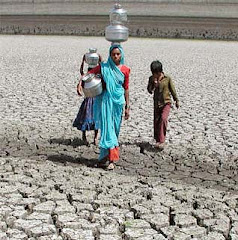
The effort couldn't have come in at a better time. Water supply in the country is waning and pollution is eating into it further. In a country, where agriculture remains the mainstay of rural income, though as a percentage of gross domestic product (GDP) it remains less than one-fourth of a contributor, water availability plays an important role.
The project will demonstrate effective management of natural resources, particularly the benefits to farmers of water conservation. Jain Irrigation is a diversified player in the Indian water infrastructure industry and commands a sizeable presence in agri-business too.
The company claims to be the world’s second-largest drip irrigation systems company after Israel’s Terafin. Its micro-irrigation products are well entrenched in the Indian agriculture industry.
The water footprinting exercise is also expected to bring benefit to several other Indian companies. The project will also aim to develop tools that can be replicated by other private sector companies in ascertaining their direct and their suppliers' water exposure, minimizing water risks, improving water efficiencies, and limiting their water-related social and environmental impacts.
It would be a worthwhile effort for Indian companies, particularly in the water-intensive industries, to tune in and stay abreast with the initiative, and its results. In the near future, it would be prudent for these companies, as also others in India, to undertake water footprinting to not only bring down the usage of the scarce resources, but also understand the future business risk.
Friday, November 20, 2009

Wednesday, November 11, 2009
Another PE fund eyes India water industry
The growing scarcity of water in India and China is attracting several private investors. As the two leading economies battle growing water shortages and runaway pollution of water resources, soem of these PE funds are sensing a growing potential in services and technologies that present solutions to these problems.
The latest among the long list of private investors in the water industry is PE firm Olympus Capital that has closed a $250 million Asia fund that seeks to make investments in the waste management, water quality treatment infrastructure and clean energy sectors in the two countries.
Betweem them, India and China have enough people to present a huge market, perhaps bigger than any other market. So, Asia's third and second largest economies, in this order, remain on the investment radar of investors looking for opportunities in the sector that is already seeing a lot of action.
Olympus' fund, Asia Environmental Partners LP, has received commitments from several quarters including the private lending arm of World Bank, International Finance Corporation (IFC). The fund intends to focus on equipment and services companies engaged in water management and energy efficiency.
Olympus is reportedly exploring opportunities that call for investments ranging from $20 million USD to $100 million USD. Its immediate focus would be on energy efficiency and water management, besides municipal solid waste management.
Despite the growing interest of investors in the Indian water industry, it has remained largely devoid of any big ticket private equity deals. As a result, most of the companies in the sector, particularly the small and medium-sized ones, have depended on traditional routes of fund raising, including borrowings and going public.
However, now that several water-focused funds and private equity vehicles have announced investment plans, the water sector would see a lot of activity.
Hopefully, in the process, some long-term solutions and technologies would get available to the masses.
The latest among the long list of private investors in the water industry is PE firm Olympus Capital that has closed a $250 million Asia fund that seeks to make investments in the waste management, water quality treatment infrastructure and clean energy sectors in the two countries.
Betweem them, India and China have enough people to present a huge market, perhaps bigger than any other market. So, Asia's third and second largest economies, in this order, remain on the investment radar of investors looking for opportunities in the sector that is already seeing a lot of action.
Olympus' fund, Asia Environmental Partners LP, has received commitments from several quarters including the private lending arm of World Bank, International Finance Corporation (IFC). The fund intends to focus on equipment and services companies engaged in water management and energy efficiency.
Olympus is reportedly exploring opportunities that call for investments ranging from $20 million USD to $100 million USD. Its immediate focus would be on energy efficiency and water management, besides municipal solid waste management.
Despite the growing interest of investors in the Indian water industry, it has remained largely devoid of any big ticket private equity deals. As a result, most of the companies in the sector, particularly the small and medium-sized ones, have depended on traditional routes of fund raising, including borrowings and going public.
However, now that several water-focused funds and private equity vehicles have announced investment plans, the water sector would see a lot of activity.
Hopefully, in the process, some long-term solutions and technologies would get available to the masses.
Subscribe to:
Posts (Atom)

.jpg)